
Route planning software creates the most efficient trip across fleets of all sizes to lower costs, save time and improve service performance. At the same time, many small, local and specialized fleets still question whether route optimization software is for them or reserved only for larger fleets. While manual scheduling works at a small scale, it welcomes significant risks as operations (even little ones) have become increasingly complex with more stops, constraints, and variability than ever before.
It is the complexity of the operation, after all, not the fleet size, that determines if software is needed. The modern delivery environment is more regulated, more volatile, and more customer-driven than in the past. Planners who once benefited from flexible delivery windows, less urban regulation, and plentiful driver availability now struggle to efficiently manage routes in a constrained system.
Routing is no longer just an operational task but a strategic capability.
Industry constraints to consider
Manual scheduling may still work best for businesses with two or three trucks and a handful of stops per day, but any more than that, and routes quickly get complicated. Even a few extra miles or hours per day can significantly increase expenses over time and disrupt customer expectations around speedy delivery. More miles mean more maintenance, higher fuel and labor costs, and quicker depreciation on vehicles.
If you are seeing rising customer complaints, more stops per tour, inconsistent performance, or overload on transportation planners, these are all red flags that signal a company is ready for planning software.
Route planning software works to quickly and smartly calculate all possible routes and compare them based on four main restrictions that include:
- Fleet complexity
- Government regulations
- Changing consumer demands
- Driver management
It is nearly impossible to manually navigate each of these constraints without high-level data and predefined parameters. Route planning software strategically takes these restrictions into account automatically and on each and every route, answering questions not only around the most efficient or low-cost route within these constraints, but also how to create optimal workload distribution and customer satisfaction.
Let’s dive deeper into how route planning software addresses these restrictions for both small and large fleets alike.
1. Managing an efficient fleet
Fleet make up is a critical component of any good route. This takes into account not just the types of vehicles in your fleet, but also what trucks are available and when.
For example, is a refrigerated truck required, or do you need a pallet truck or vehicle with a tailgate? Route planning software like PTV OptiFlow incorporates these constraints matching the correct vehicle type to the load and sequencing deliveries appropriately. Mixed LTL shipments, for example, can be scheduled to deliver frozen goods earlier in a route than less temperature-sensitive goods in the trailer.
Route optimization software also creates better vehicle utilization to determine which trucks are undergoing maintenance and automatically analyze the available loading space or load capacity of each truck to maximize space and reduce empty miles. Say a carrier is running a 53-foot trailer that on average is only half full. Route planning software sees that and can analyze options to consolidate shipments into that trailer, resulting in fewer trucks dispatched and lower costs per mile.
For smaller fleets, outsourcing is a popular alternative to purchasing more trucks or taking on specialized equipment for one-off jobs, especially during seasonal peaks. Route planning software proactively manages capacity gaps and protects service levels by making smarter decisions about whether to add routes or subcontract overflow.
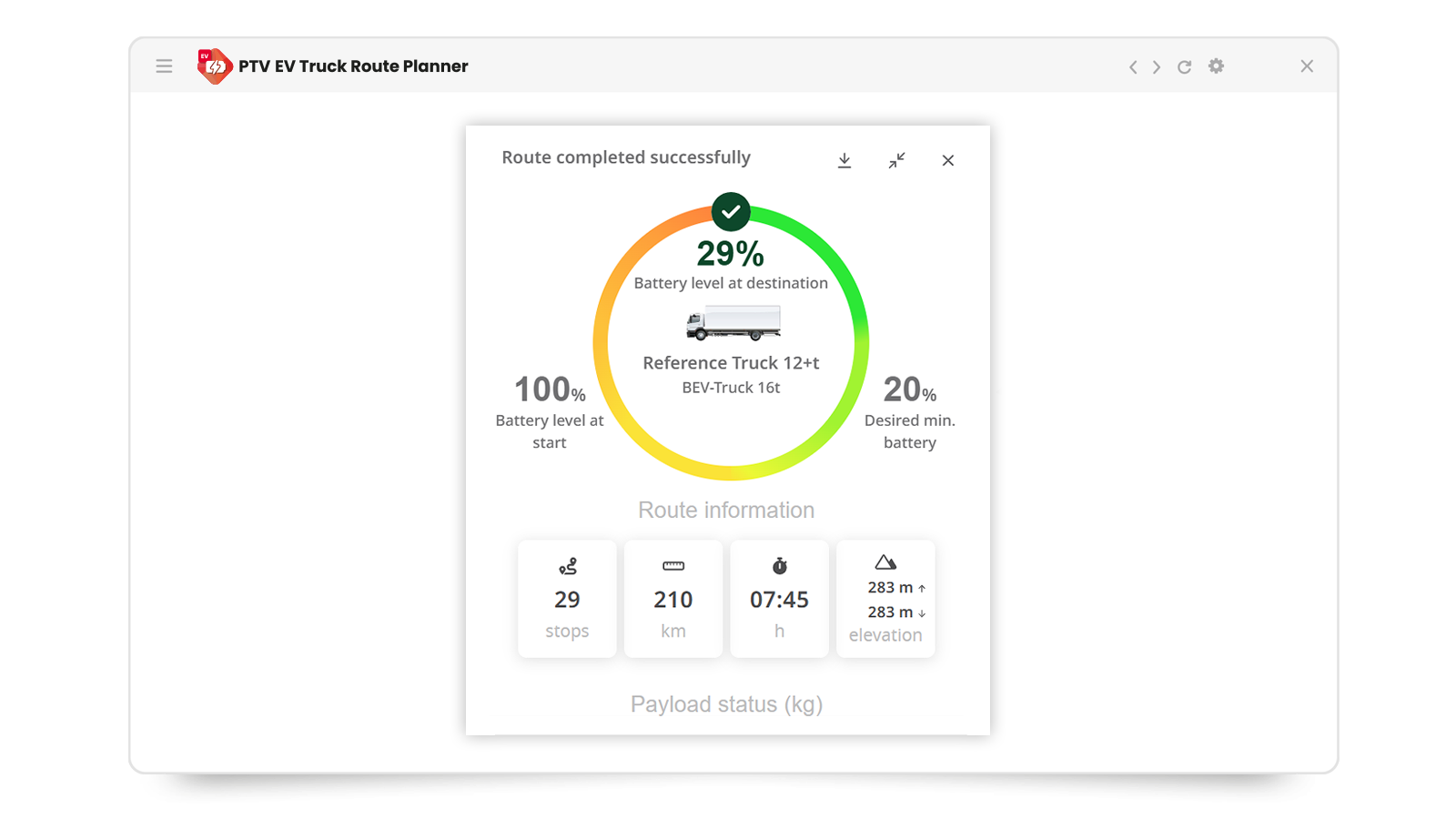
Fleet electrification adds a second layer of complexity into mixed fleets by introducing new operational constraints that traditional routing wasn’t built for. Electric vehicles (EV) can have limited battery range and variable energy consumption affected by the load or weather, as well as different charging requirements. Route planning software eliminates that uncertainty and limits disruptions by building trips that consider energy usage and charging requirements. In a mixed fleet, software assigns the right type of truck by evaluating route distance, stop frequency, weight, and charging access.
Dedicated EV routing solutions take these constraints into account automatically, helping planners build realistic and disruption-free schedules.
Learn more about planning reliable electric truck routes with the PTV EV Truck Route Planner here.
2. Restricted by regulations
Regulations have fundamentally changed how fleets operate on a daily basis. Oversight from national and regional authorities or international bodies such as the European Union (EU) require greater accountability and documentation that without route planning software result in less forgiving scheduling and greater room for inefficiencies. Both the EU and the United States, for example, strictly regulate driving times, which limit how many hours a driver can be on the road per day. This has added an element of complexity to manage driver safety against the most cost-effective route.
At the local level, many cities enforce strict access restrictions such as delivery time windows and noise ordinances. More recently, cities have created new hurdles around low-emission zones for small- to mid-size fleets who have not embraced EVs. Congestion pricing in New York City aims to reduce congestion and greenhouse gas emission, while the Ultra Low Emission Zone in London is an area where non-compliant vehicles are charged an emissions standard based fee.
Without route planning software, maintaining compliance with regulations across these varying bodies often results in costly fines and missed delivery windows. Dynamic routing can flag restricted zones and provide timestamped documentation to meet workplace safety requirements. All of which helps companies avoid penalties, reduce liability, and improve driver safety.
3. Driver optimization even during a global shortage
Not having the labor force to efficiently manage operations is another major concern for fleets of all sizes—a factor unlikely to change anytime soon. Route planning software fills those gaps by making the most of the skilled drivers available.
Route optimization helps drivers complete more deliveries without extending hours. It improves driver retention with more balance workloads through smart sectorization and territory planning that prioritizes logical service areas based on data. By clustering dense locations in an urban environment, for example, a distributor can increase their stops within a day without extending driver hours.
Software can also assign drivers based on special certifications or handling constraints such as a large delivery that needs to be handled by two people.
4.Customer expectations drive precise timing
Route planning today is not just an operational tool, but a direct reflection on the customer experience. This is especially important for retailers whose customers are no longer willing to compromise on speed, transparency, or reliability.
Customers want to receive their delivery quickly, while also knowing in advance when the truck will arrive. Route planning software enables precise estimated time of arrival (ETA) and proactive communication, keeping missed or late deliveries—which are one of the biggest causes for customer dissatisfaction—at a minimum.
Also Related: Common customer complaints and how to solve them
Planning software like PTV OptiFlow even gives carriers the ability to inform customers about potential delays. Once the schedule is known, you can automatically send all customers a message with the ETA. This gives them the opportunity to adjust their own processes accordingly.
Precise timing is also critical for meeting delivery windows for major retailers, many of which enforce strict receiving windows to control dock congestion and labor scheduling. Missing a window can result in refused loads, penalties, or empty shelves.
Better routes sequence stops to meet exact delivery times while also building in buffer time around traffic forecast and dwell time to reduce later arrivals. Routes at risk of missing delivery windows are automatically flagged and proactively rerouted.
How does a route planning software work?
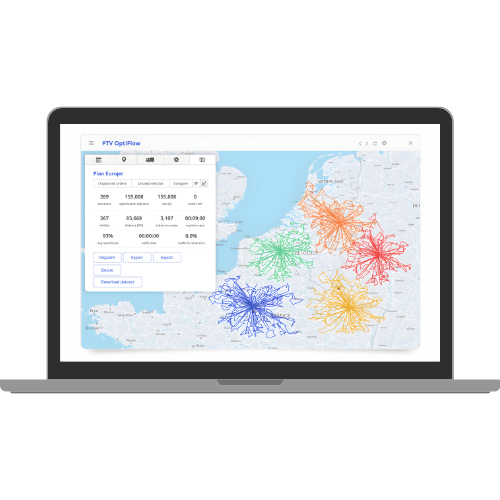
A route planning software automatically distributes your orders across the fleet. The orders indicate at which locations a truck must stop, and then the system calculates the optimal routes along those locations. This way, you are assured to get the most efficient transport planning – and save valuable kilometres and hours. Thanks to the system’s planning accuracy, you serve your customers better.
One of the biggest questions around route planning software implementation is where the route planner fits into the equation. While software will replace the manual aspects of the route planners’ job, it in no way replaces the need for a great route planner.
Route planning software transforms manual planning into strategic oversight, enabling planners to do their job better. Algorithms eliminate the need for long manual calculations, which saves planners time that can be spent on optimizing the planning, managing drivers, and coordinating with customers.
Route planning software also provides more insights, which enable planners to make better tactical and strategic decisions around questions such as:
- Which trips should be outsourced?
- When is it profitable to invest in an extra truck?
- How can you save on transport costs?
Optimized planning requires a strong balance between a good planner and a good route planning software. There are some things software just can’t replicate. For example, a planner considers specific wishes and requirements of customers or drivers and has historical insights into which customers offer leeway to exceed a time window or when a road is extra busy due to holiday traffic.
In addition, input from planners is crucial for selecting a route planning software. Planners know which restrictions are important and what parameters should be set. A planner is needed to consistently check that all settings are still correct and useful.
The efficiency of a route planning software depends on how it is used—and this comes down to the planner who is tasked with overseeing it. Planners are critical in ultimately answering if a route planning software is right for you.
This requires talking to your planners about what is working well and what constraints are proving more challenging. If any of these constraints give you pause, route planning software is likely a good investment for the future of your fleet. Challenges around increasingly complex operations, customer expectations, regulations, costs, or resources can all be signals that your company is ready for an upgrade.