
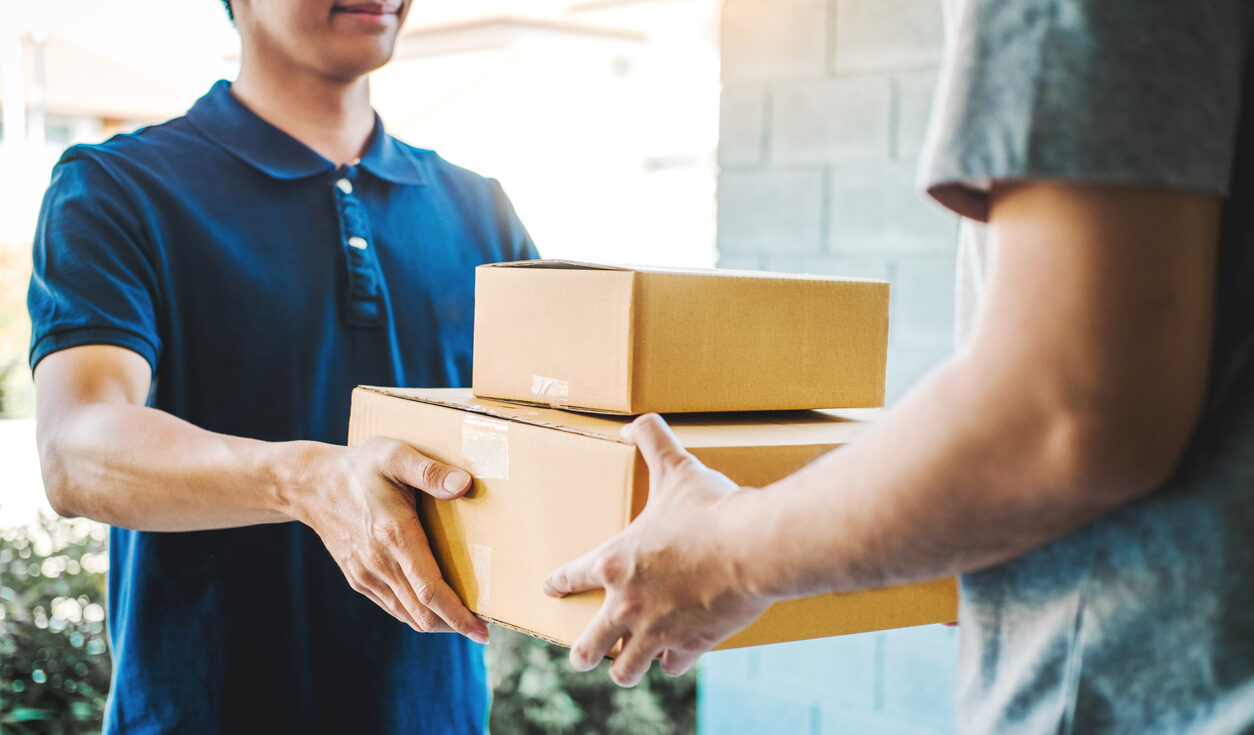
Home delivery has become one of the most demanding segments of logistics. Customer expectations continue to rise: selectable delivery windows, real‑time notifications, personal handover requirements, and zero tolerance for delays.
For CEP and retail delivery networks, a realistic route plan directly drives:
- On-time delivery performance
- First-attempt success rate
- Driver satisfaction
- Transport cost efficiency
- Customer experience and brand trust
With volumes increasing and delivery windows shrinking, planning by hand or using legacy tools is no longer viable.
The Core Challenges in Home Delivery
Logistics teams must balance multiple constraints simultaneously:
- Customer-selected delivery windows: Each order comes with its own service window, drastically reducing routing flexibility.
- Customers expect personal handover: For goods like electronics, meal boxes, ID-required items, or high-value parcels, deliveries cannot be left unattended.
- Traffic conditions change every 15 minutes: Static distances don’t reflect reality. Planners need congestion-aware routing throughout the day.
- High operational load for planners: Hundreds or thousands of stops must be optimized quickly and accurately.
- Increasing pressure on drivers: Unrealistic routes lead to stress, mistakes, and lower service quality.
These issues compound when the network scales, especially across multiple depots.
What “Realistic Routing” really means
In modern last-mile logistics, a realistic route is one that:
- Reflects true travel times based on live and historical traffic
- Meets all delivery windows without creating bottlenecks later in the route
- Balances workloads across drivers and vehicles
- Adapts to local constraints (parking, unloading time, building access, ID checks)
- Can be executed reliably in the field
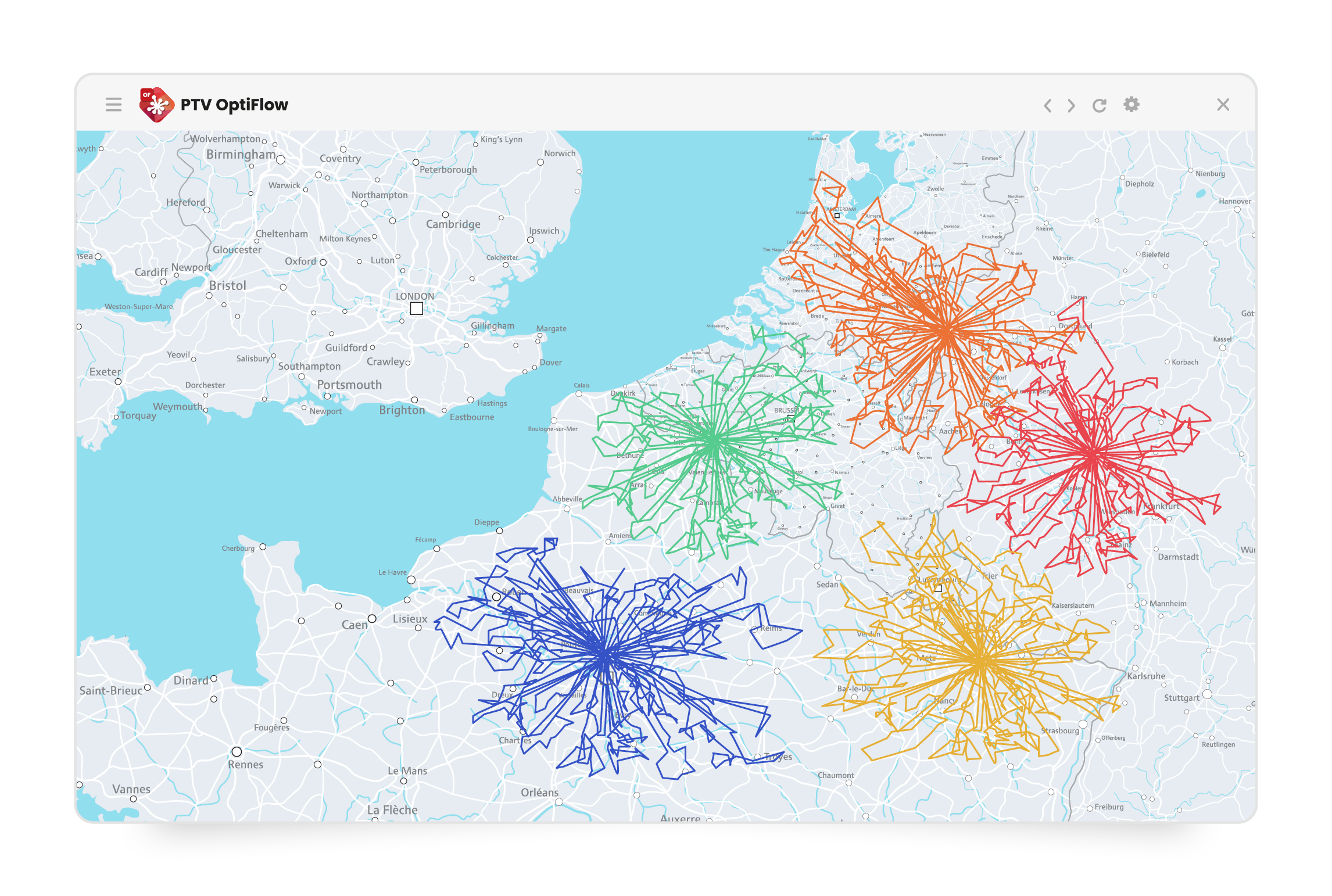
This is where advanced route optimization systems, such as PTV OptiFlow, create meaningful improvements.
A step-by-step workflow of modern route planning
Realistic home‑delivery routing isn’t just about placing stops on a map. Behind every dependable delivery window is a structured process that blends order constraints, live traffic behaviour, and operational knowledge from planners and drivers. Modern optimization systems such as PTV OptiFlow help automate the heavy lifting, but the logic applies universally regardless of the tool used.
1. Bringing all order and operational constraints together
Planning starts with collecting orders, their delivery windows, vehicle capacities, driver skills, and service-time requirements. When this intake is done consistently, planners avoid the “hidden bottlenecks” that often appear later in the day. Modern systems streamline this step by automatically validating data and highlighting missing information early.
2. Applying realistic travel times instead of static distances
A key factor in achieving reliable delivery windows is accurately mapping traffic conditions throughout the day. Travel speeds vary every 15 minutes, and historical patterns show different congestion profiles for mornings, school hours, or evening peaks. Route planning engines such as PTV OptiFlow incorporate this level of detail automatically, allowing planners to create more reliable schedules without manually adjusting for known hotspots.
Related: Enhanced prediction of planned arrival times based on historical traffic information in PTV OptiFlow
3. Optimizing the route sequences and assigning the right resources
Once constraints and traffic conditions are in place, advanced algorithms evaluate thousands of possible combinations to find sequences that reduce unnecessary kilometres while respecting delivery promises. This is where the system acts as a “decision-support companion” for planners—solving complexity quickly while still giving full visibility and control.
4. Validating that the routes are truly executable
Even the most efficient-looking route can fail if it’s not realistic. This validation step ensures there is enough buffer for unloading, ID checks, apartment access, or difficult parking zones. Some planners pair digital validation with local driver feedback, using tools like OptiFlow’s scenario testing to avoid repeating past mistakes.
Related: Enhancing planning reliability with PTV OptiFlow
5. Communicating accurate ETAs to customers
Once routes are validated, reliable ETAs can be shared with customers. When these times reflect true traffic-driven travel behaviour, customers wait less, remain available when the driver arrives, and are less likely to miss their window.
6. Learning from execution data and improving the next plan
The final step is feeding back what happened in the field. Differences between planned and actual times help planners refine service times, adjust delivery window policies, or redesign territories. This continuous improvement loop is where advanced cloud-based tools excel, offering planners clear insights without adding manual workload.
Where realistic route planning matters most
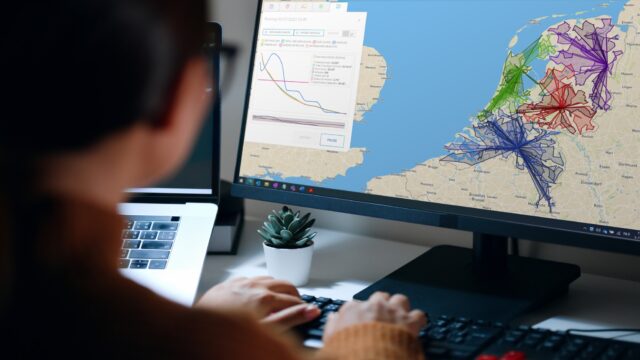
The need for realistic route planning spans across multiple segments of home delivery, but the reason it matters differs by sector. What they all share is the impact that routing quality has on cost per stop, first-delivery success rate, and the customer experience.
Therefore, here, it is important to understand the broader challenge: delivery networks today are dealing with narrower time windows, greater geographic spread, and rising expectations for accuracy. That means every route must be built with real-world conditions in mind — traffic, dwell times, service constraints, and customer behaviour.
- Courier, Express & Parcel (CEP)
CEP networks handle dense routes with strict service windows. Success depends on precise timing and high first-attempt delivery rates, especially for parcels requiring personal handover or age verification.
- Food & Grocery Delivery
Freshness and temperature make timing critical. Even small deviations in ETAs can reduce customer trust, especially during peak congestion periods.
- Retail & E-Commerce
Deliveries often involve installation, assembly, or ID checks. These require longer on-site times and skilled personnel, making buffer management essential.
Across all these sectors, planners benefit from congestion-aware algorithms that help maintain service reliability even as delivery volume grows.
Learning from Industry Experts
HelloFresh: Managing Growth and Increasing Delivery Window Choice
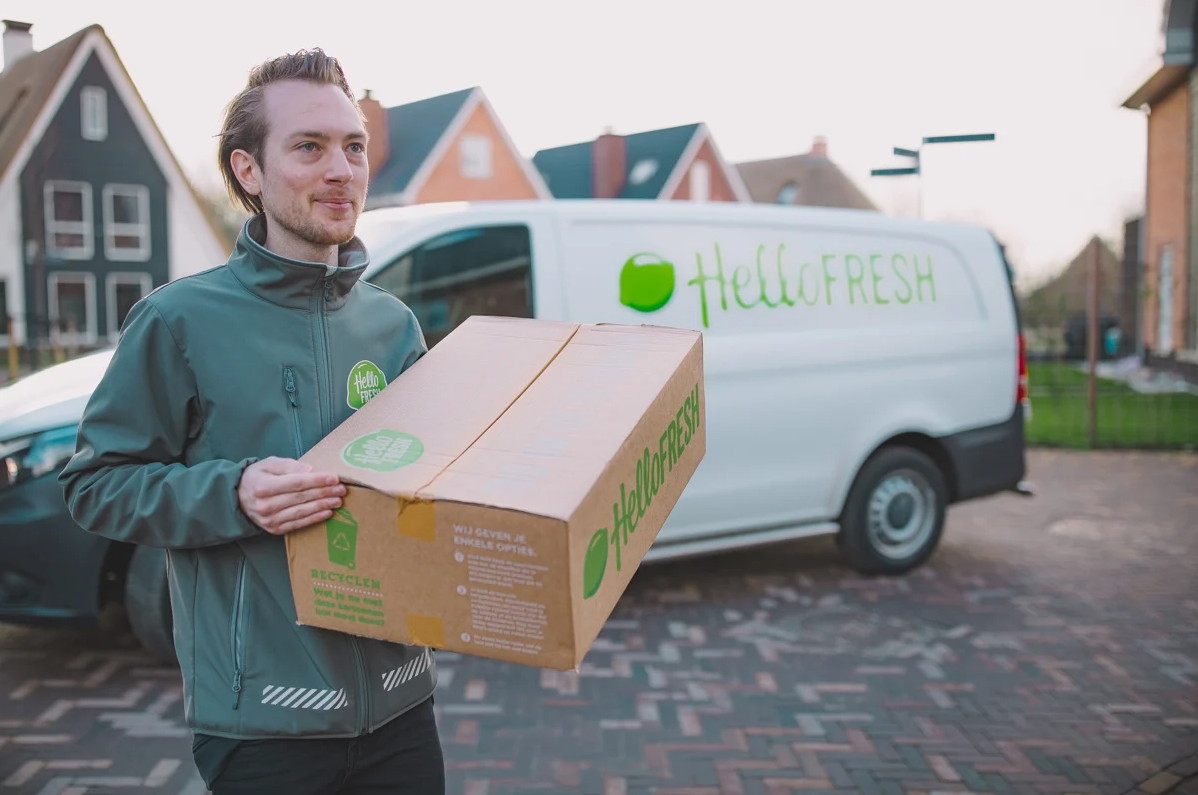
HelloFresh’s Benelux operations were experiencing rising order volumes and an increasingly complex mix of delivery windows offered to customers. Their planning team needed a way to maintain delivery accuracy without overwhelming planners or extending route duration beyond what drivers could realistically achieve.
During a proof-of-concept, they evaluated traffic-aware routing engines such as PTV OptiFlow to test whether more sophisticated planning inputs could stabilize their operations. The insights showed that by using realistic travel times and smarter sequence optimization, HelloFresh could reduce kilometres driven, create more reliable ETAs, and scale their window offerings without additional strain on planners. These improvements supported both operational efficiency and sustainability goals by lowering fuel consumption and CO₂ output.
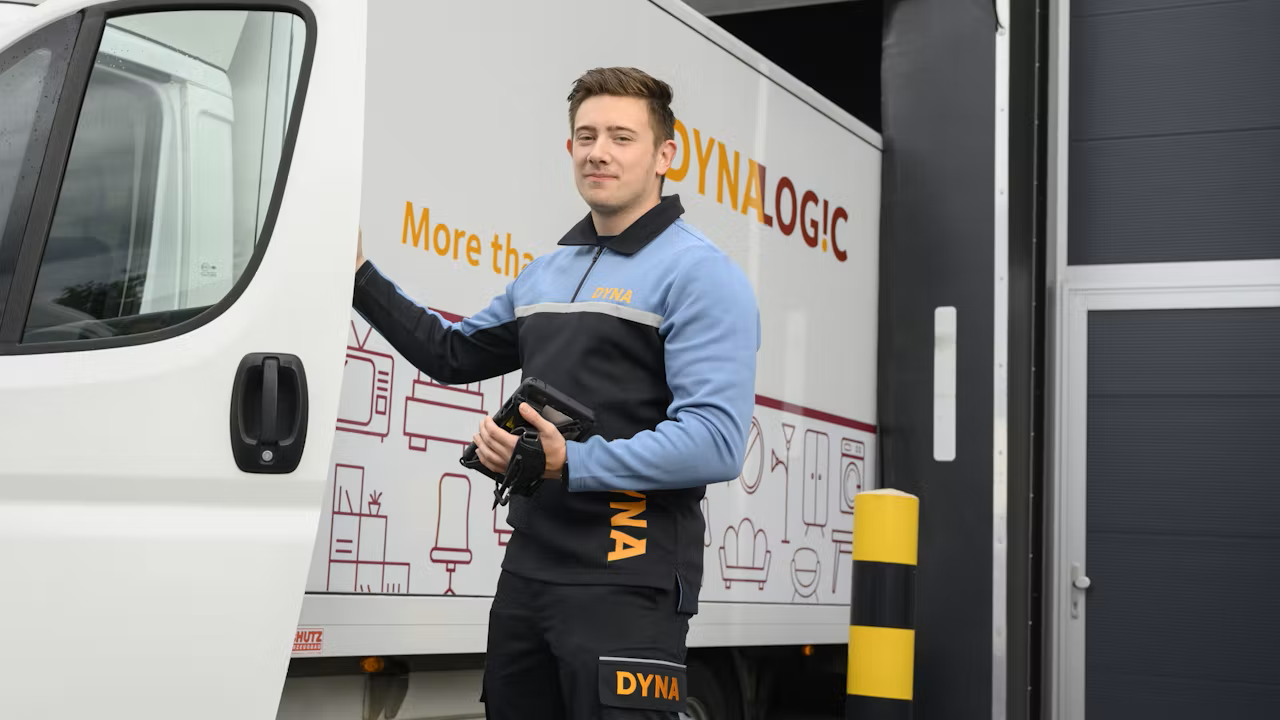
Dynalogic: Deliveries with Installation and ID Checks
Dynalogic specialises in home deliveries where the service extends beyond the doorstep — installations, heavy goods, and items requiring age or identity verification. Their core challenge was that traditional routing approaches underestimated how long these tasks take, especially in high-density urban areas with unpredictable congestion.
By shifting to planning methods that incorporate detailed traffic insights and realistic dwell times, Dynalogic achieved more dependable schedules. Drivers reported that routes “felt more realistic” and planners observed better on-time performance. This also increased the rate of first-attempt deliveries, a critical metric when installing large products that cannot simply be left with a neighbour.
Both examples show how realistic planning improves operational reliability without needing to oversell a tool — the value comes from matching routes with real-world conditions. As delivery networks grow and customer expectations tighten, planners increasingly rely on data‑driven routing to keep operations predictable, efficient, and customer‑centric. Realistic route design isn’t just a technical upgrade; it’s becoming a foundational part of modern home‑delivery strategy.