
Electric vehicles are no longer a fringe topic in logistics. Regulatory pressure is rising, zero-emission zones are expanding across Europe, and customers increasingly expect greener transport operations. Yet despite this urgency, EV adoption in logistics remains cautious and uneven.
To understand why, we surveyed 120+ logistics professionals across Europe to explore the realities behind fleet electrification — what’s working, what’s stalling progress, and what companies need to move forward with confidence.
Fleet electrification is strategic but complexity is slowing momentum
Logistics companies aren’t resisting electric trucks. Instead, most are waiting for economic clarity, infrastructure readiness, and operational certainty. While some fleets are moving fast, many are still navigating the risks of total cost of ownership (TCO), charging availability, and EV route planning.
The result is that EV fleets are growing, but selectively.
EV adoption in logistics is still in its early stages
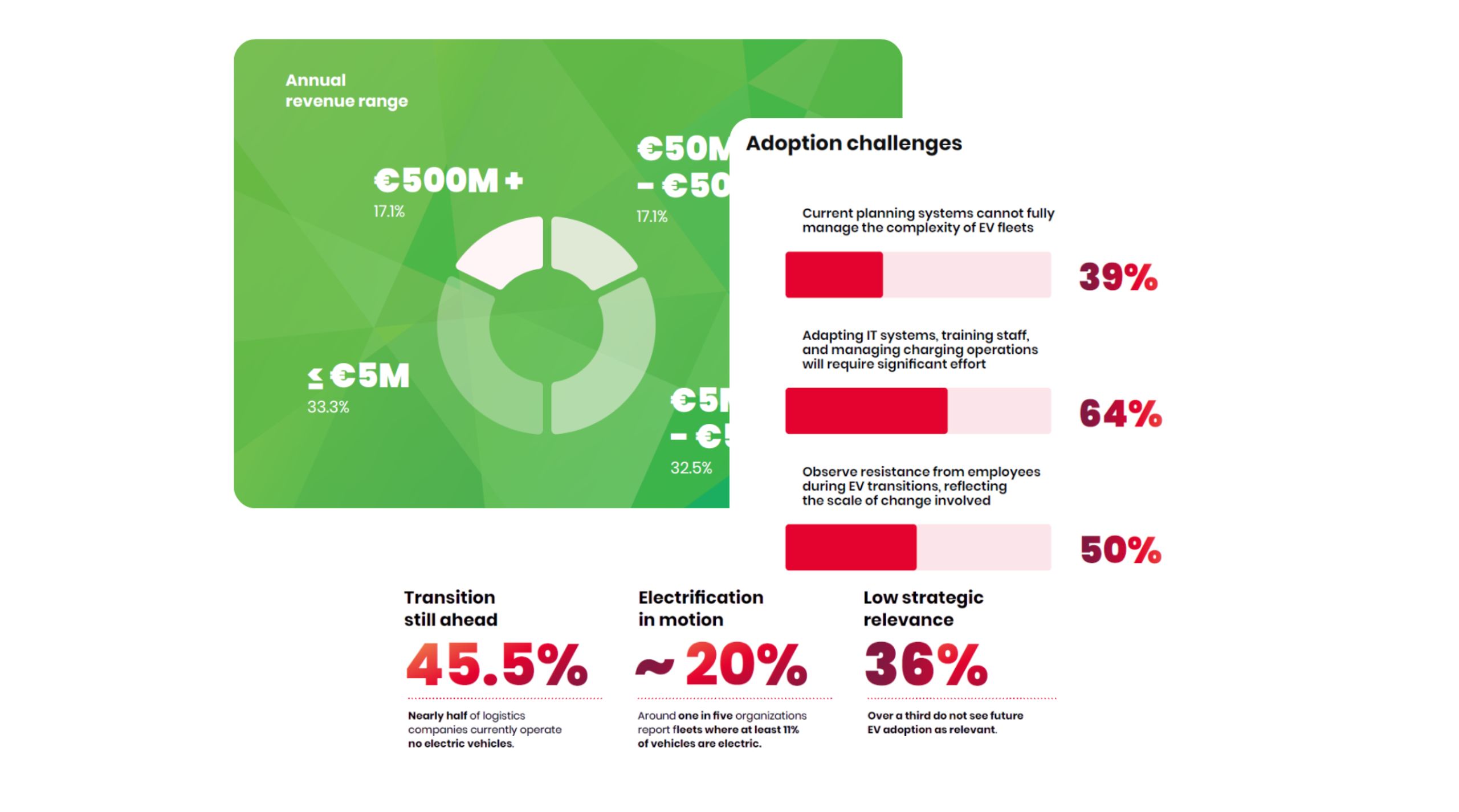
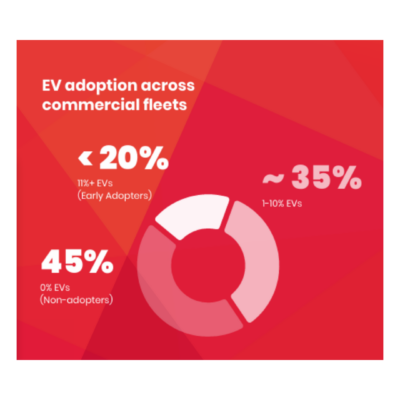
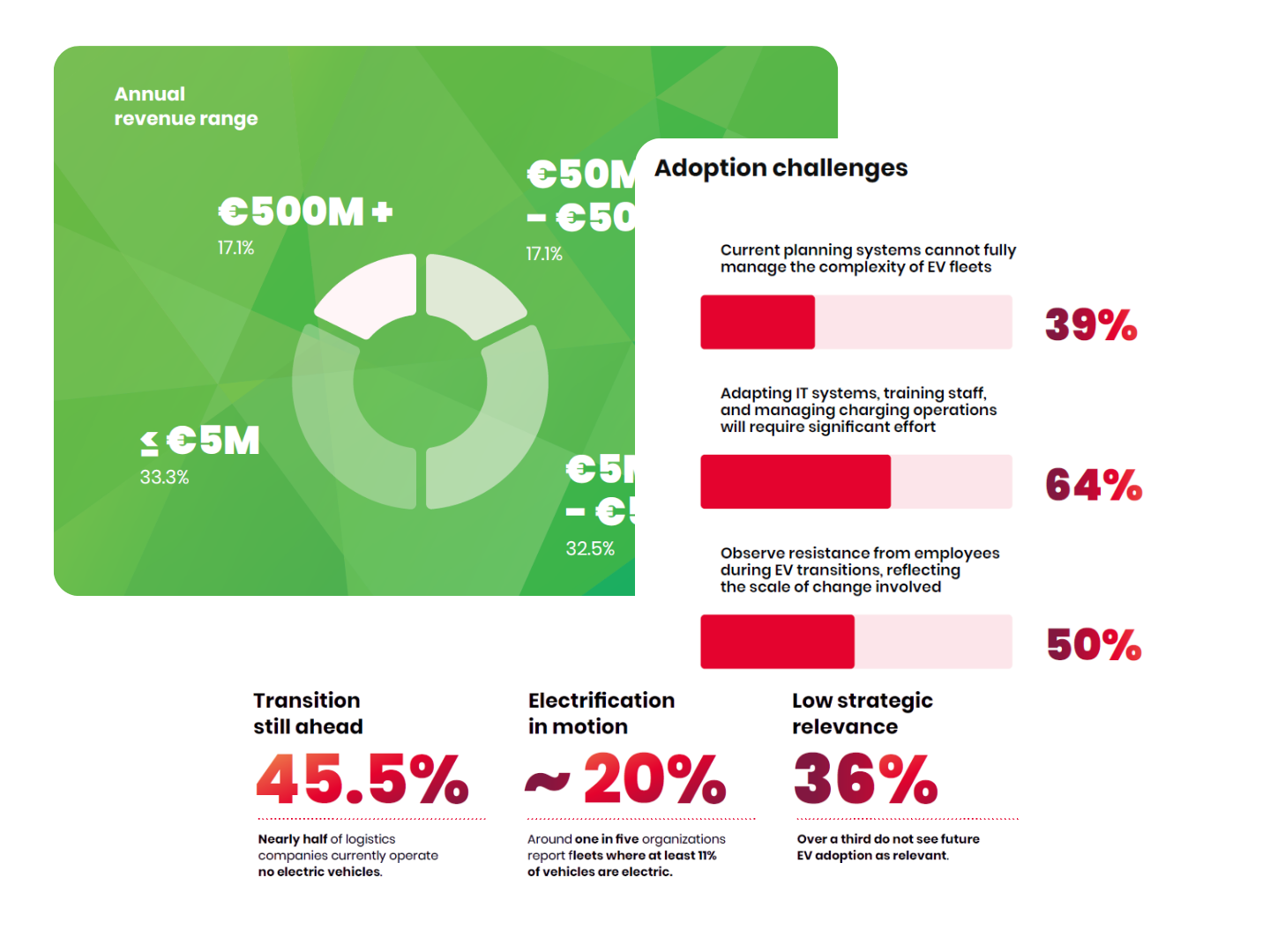
Despite increasing pressure to decarbonize, nearly 45% of logistics companies currently operate no electric vehicles at all, and fewer than 20% run fleets where more than 11% of vehicles are electric.
What’s more telling is that 36% of companies haven’t yet included EVs in their 2030 planning, suggesting that many organizations are still shaping their fleet electrification strategy rather than executing it. Adoption is strongest where electric vehicle fleets clearly fit operational realities, particularly:
- Domestic and regional routes
- High-volume, low-mileage operations
- Fleets with return-to-depot charging opportunities
In other words, EV adoption is driven by operational fit, not company size or revenue.
Cost and TCO remain the biggest brakes on electric trucks in logistics
When it comes to fleet electrification, cost is still the deciding factor.
Today, only 30% of electric truck sales in Europe are TCO competitive with ICE vehicles, largely in heavily subsidized segments. Unsurprisingly, 84% of respondents are concerned about long-term value retention if they invest in EVs too early.
The data shows a clear tipping point:
- 50% of fleets would switch at TCO parity
- Just 7% would switch if EV TCO were 20% higher than ICE
Until TCO becomes predictable across more use cases, fleet electrification will remain cautious rather than aggressive.
EV charging infrastructure for logistics is the critical bottleneck
While most commercial EV charging today is private and depot based, this model only works for certain route profiles. Right now:
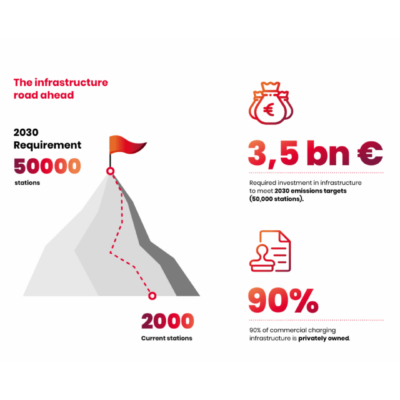
- 90% of commercial charging infrastructure is privately owned
- Fewer than 2,000 public charging stations in Europe support heavy-duty vehicles
- Around 50,000 stations will be needed by 2030, requiring an estimated €3.5 billion in investment
For long-haul and cross-border operations, this gap in EV charging infrastructure for logistics creates real risk and limits how quickly fleets can electrify beyond controlled short-range routes.
EV route planning and electric fleet management are adding complexity
Electrification doesn’t replace existing planning challenges — it adds to them.
According to the survey:
- 58% say daily planning becomes significantly more complex with EVs
- Over 50% report increased complexity when managing hybrid fleet management (EV and ICE)
- 63% struggle to align charging with delivery schedules
Factors like weather, payload, elevation, charging time, and grid constraints all influence EV route planning, making traditional planning tools insufficient for electric fleet management. This is why many fleets are realizing that EV fleet planning software is no longer optional – especially as hybrid fleets become the norm during transition phases.
A preparedness gap is emerging
Even companies with strong electrification ambitions face internal barriers.
The report reveals:
- 47% say planner skills limit EV transformation
- 57% report gaps in fleet maintenance capabilities
- 39% believe their current planning systems can’t manage EV complexity
While awareness of the need for better tools is growing, many fleets still lack visibility into what technologies exist and how they can reduce risk before major investment decisions are made.
From EV ambition to operational clarity
Fleet electrification often stalls not because EVs won’t work but because teams lack visibility into how they perform on real routes. Without modelling range, charging needs, and operational impact, EV decisions remain risky by default.
That’s why simulation-led planning is becoming essential.
By testing electric trucks under real-world conditions, fleets can identify where EVs make sense today — before committing capital.

The outlook: EV adoption is inevitable but readiness will define the winners
Despite the challenges, the long-term case for electric vehicle fleets is strengthening:
- Battery prices fell 30% between 2020 and 2024
- EVs are around 33% cheaper to operate than ICE vehicles in Europe
- Vehicle-to-grid technology opens new revenue opportunities for predictable routes
The logistics industry is no longer asking if electric trucks will matter; but whether their operations will be ready when they do.
EV Adoption Industry Report
The Reality of Fleet Electrification: Backed by Data
Based on real-world input from logistics leaders, this latest research reveals where companies struggle after the first EV rollout, and how data-driven teams are turning complexity into clarity.