

In essential industries like CEP, retail and transport & logistics, route optimization software is a major focus in 2026. That’s hardly surprising when you think of the logistics-related challenges these industries are facing, including complex delivery routes, tighter time windows and stricter city delivery laws. EV fleets are also on the rise in many regions, which brings new planning challenges. Meanwhile, customers expect precise ETAs and more transparency than ever.
Many companies are turning to route optimization software, including route optimization AI, to handle these complexities with even more precision, especially as delivery environments evolve rapidly. These new technologies are about more than just finding slightly shorter routes. They help improve performance across your whole fleet, so you waste fewer miles, deliver more reliably and give customers and partners the service levels they expect.
Route planning vs route optimization: Why a TMS is no longer enough
You’re probably used to using a transport management system (TMS) to manage, execute and track transport orders. Some TMSs include basic route calculation, which can be fine for simple planning. But they typically lack more modern capabilities such as conversational route planning, where planners can interact with the system more intuitively to explore scenarios or ask for optimized alternatives.
New tools, like route optimization AI are different. These tools create routes for all your vehicles at once while also factoring in real-life conditions and rules.
In practice, a TMS and route optimization work best as a connected setup. The difference is: TMS manages orders and execution while a good route optimization tool turns those orders into a realistic plan.
What route optimization software actually does
Route optimization software takes in orders, customer data and depot or warehouse locations, then evaluates many route options to create a fleet-wide plan that meets your constraints while improving efficiency. This is hard to do manually at scale, because the number of possible combinations becomes overwhelming once you’re planning for multiple vehicles and stops.
Here are some of the main variables route optimization software automatically factors in:
- Customer time windows, service times and delivery priorities
- Site rules like gate access, unloading requirements and local restrictions
- Vehicle limits like capacity, equipment and permitted road categories
- Driver rules including working time, breaks and shift patterns
- Urban rules such as low-emission zones and access windows
- EV constraints such as range, charging time and charging locations
As with any data-driven tool, the quality of your data and integration have a big influence on your route optimization software’s performance. You need maps with logistics-relevant road attributes and vehicle-specific restrictions, plus accurate geocoding so each stop is mapped out the right entrance and address. Traffic data matters too: live updates help you reroute, and past patterns help you plan around rush hours and slow routes.
The best route optimization solutions integrate with your ERP and TMS, and share routes and ETAs with telematics, driver apps and navigation. With a platform like PTV OptiFlow, your dispatch and drivers all see the same route plan and the same latest ETAs. Your teams can also see where routes ran late or stops took longer in the past, then adjust planned service times and travel times so future plans are more realistic.
Where route optimization software adds more value in 2026
Strategic optimization
If you’re dealing with tighter time windows or stricter city rules this year, one late stop can derail the rest of the route. Route optimization helps by applying the same priorities across the fleet, every day, including on-time performance, miles, cost, CO₂, driver hours, customer time windows, site rules and vehicle limits.
Example:
A retail run includes three stores that only accept deliveries from 6:00–8:00, plus a city-center drop that requires a compliant vehicle. Route optimization software sequences and assigns stops, so those drops stay feasible without turning the last stops into late arrivals Solutions like PTV OptiFlow, which apply these rules in real time, help maintain stability even when operational constraints tighten. Teams can also use PTV Mira for conversational route planning, allowing them to work out optimized routes quickly and naturally using plain language.
Smart sectorization
Delivery patterns are evolving quickly in 2026. A zone that once had 30 stops might now have twice as many, and the geographical spread may look nothing like previous years. That’s where smart sectorization becomes valuable. The idea is simple: use current stop locations, travel times, and realworld constraints to update delivery zones in a way that keeps routes balanced, manageable, and geographically coherent. Tools like PTV OptiFlow support this by recalculating sectors dynamically as demand shifts, giving planners a more accurate foundation for every route.
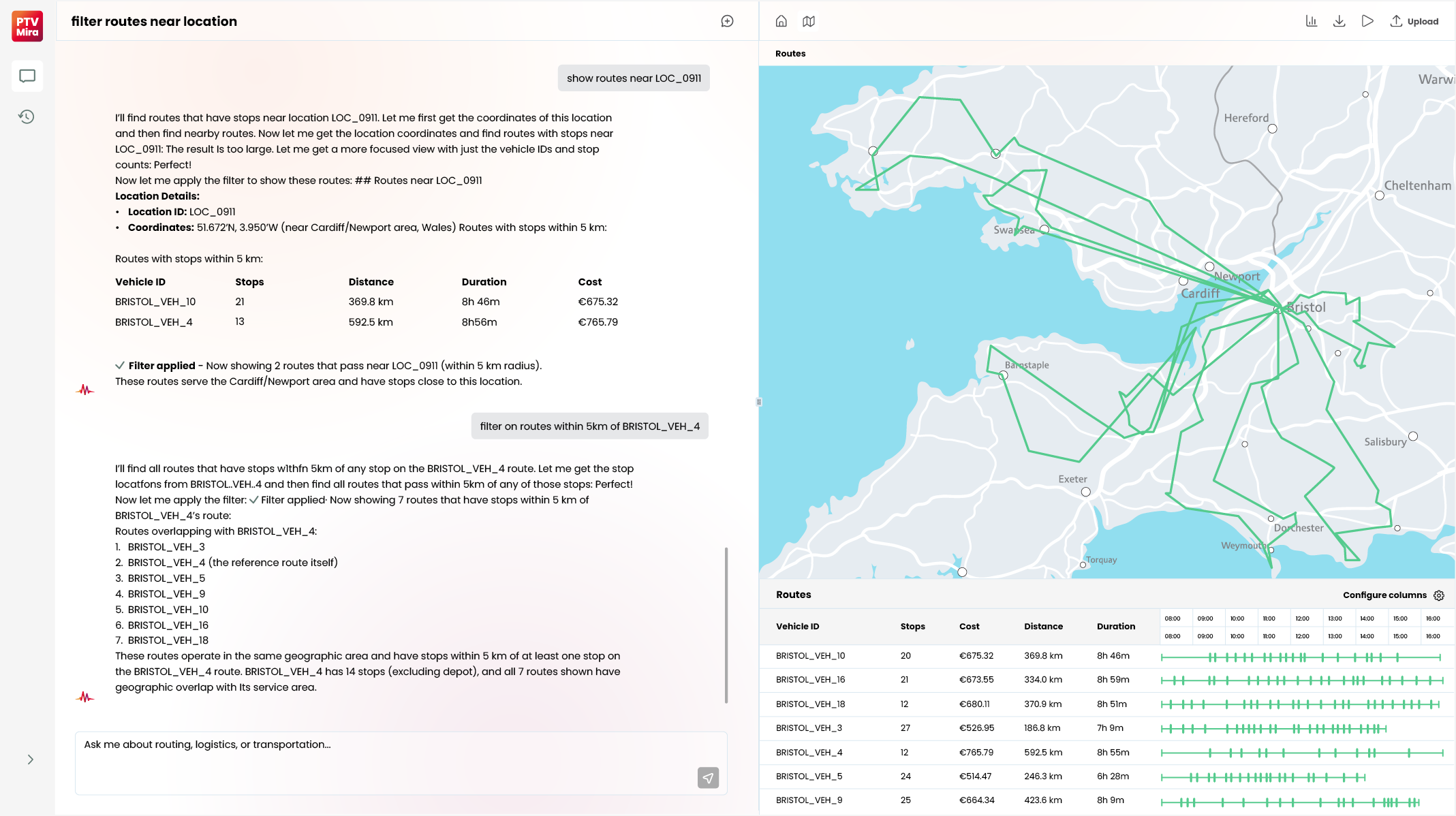
Example: A CEP depot serves 80 stops downtown in tight, highdensity streets and 25 suburban stops across a wide area. Smart sectorization prevents planners from mixing the two on the same tour. Downtown routes stay in the city center, suburban routes stay suburban, and each gets realistic stop counts and drive times. And when planners need to explore alternatives or adjust boundaries quickly, conversational tools like PTV Mira make it easy to refine sector layouts using natural, plain language.
Territory planning
When your organization is adding new delivery sites, customers, or depots, existing service areas often stop reflecting how the network actually operates. That’s where territory planning becomes essential. Modern route optimization tools help teams define and adjust territories by assigning delivery locations to the most suitable depot based on distance, time windows, service patterns, and workload balance. Solutions like PTV OptiFlow support this by recalculating territory assignments as the network evolves, keeping depot responsibilities clear and predictable.
Conversational route optimization tools like PTV Mira also build on this foundation by allowing planners to explore scenarios, ask “what if” questions, and investigate alternatives in a more intuitive, natural way.
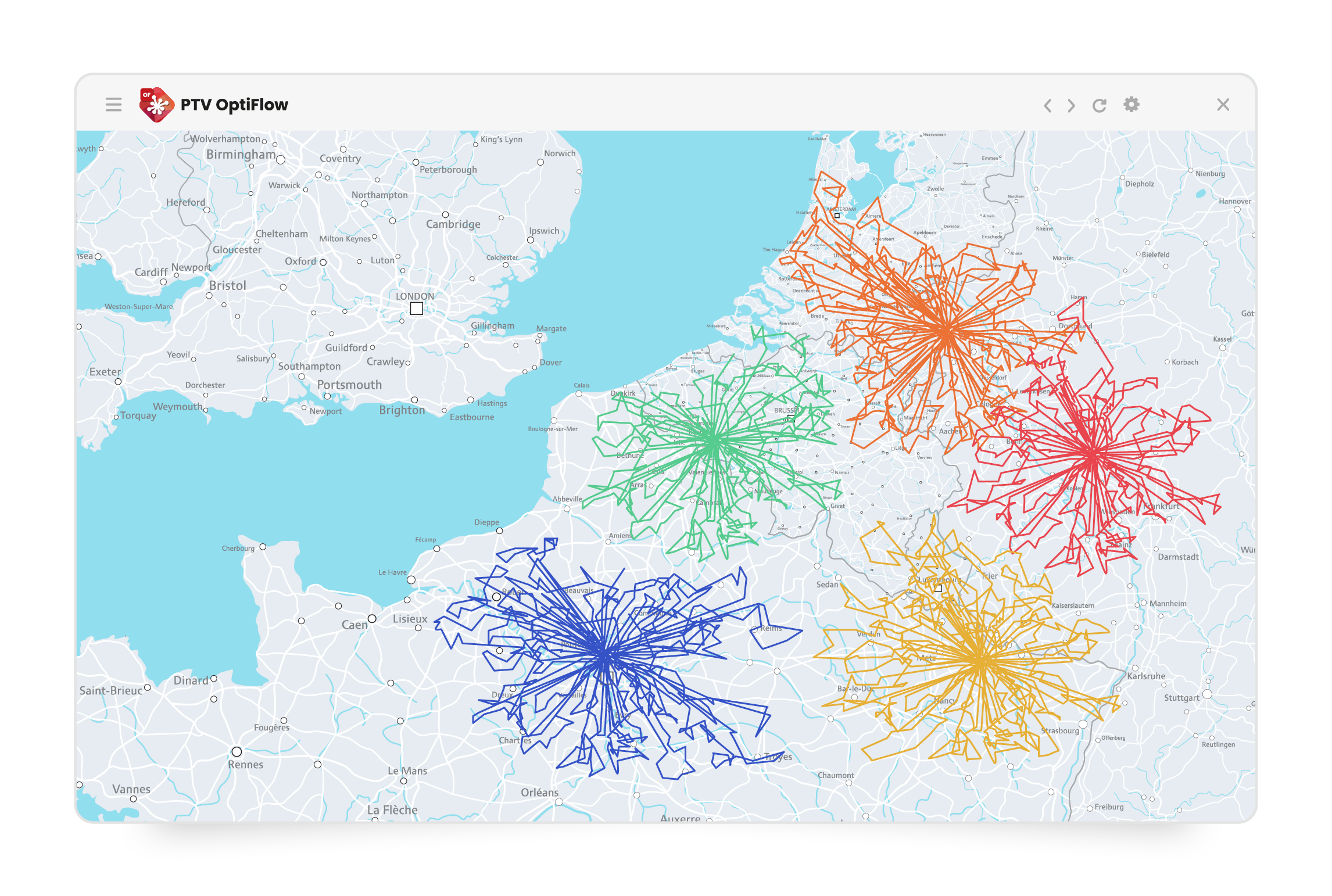
Example: In this use case (see left), PTV Mira explores a Belgian logistics network with four depots, 400 vehicles, and 2,000 delivery locations. By asking simple, conversational questions like “Where should we add a new depot?” and “Which depot could we remove?”, planners can test multiple scenarios at once. The analysis reveals that adding a depot in an unexpected location and removing a redundant one reduces total costs and daily driving distance. This kind of conversational, scenario‑based territory planning helps teams uncover insights that are hard to spot with manual analysis or fixed rules.
How route optimization benefits key industries
- Courier, Express and Parcel: In Courier, Express and Parcel operations, route optimization software helps teams handle growing stop density without overloading drivers. Routes are planned so drivers can realistically complete more stops per shift, while keeping city routes in dense urban areas and suburban routes geographically coherent. More accurate ETAs, combined with updates when delays occur, improve transparency and significantly reduce customer service calls and “where is my driver?” escalations.
- Retail: For retail distribution, route optimization supports more consistent deliveries within strict receiving windows. By accounting for unloading times and site‑specific rules during planning, teams see fewer refused deliveries and fewer costly re‑deliveries. Faster, more reliable route creation is especially valuable during peak periods, reducing last‑minute route rebuilds and operational stress.
- Transport and Logistics: In transport and logistics operations, route optimization helps reduce wasted miles and empty driving while making better use of vehicle capacity and driver working hours. More realistic planning leads to fewer last‑minute changes and more reliable arrival times, resulting in smoother handovers at customer sites and more stable daily operations.
Choosing the right route optimization software in 2026
Many logistics teams are already using route optimization in some form but 2026 brings new demands around city restrictions, tighter delivery windows, sustainability targets, and AI-driven planning. That makes it worth reviewing whether your current system can keep up. When evaluating your setup or considering an upgrade, look for capabilities that support today’s operational complexity and tomorrow’s AI workflows:
- Handles real operating rules: Can it account for variables like delivery windows, driver hours, vehicle limits, site access rules and city restrictions?
- Reliable map and location data: Does it use accurate maps, live traffic updates and geocoding?
- Fast enough for your operation: Can it quickly handle large numbers of complex routes?
- Does it offer modern capabilities like route optimization AI, conversational route optimization and conversational route planning?
- Easy to update during the day: Is it easy to change plans or add new orders, and update drivers without hassle?
- Fits your systems: Does it integrate with ERP and TMS systems, and share routes and ETAs with telematics, driver apps and navigation?
- Helps you continuously improve: Does it show what went late and what took longer than expected, so you can improve route times and territories over time?
A real‑world example of how advanced route optimization like PTV OptiFlow supports large‑scale planning, efficiency, and sustainability goals:
Keeping ahead in 2026 with route optimization software
Tighter delivery windows, stricter city rules, rising customer expectations, EV fleets… The trends unfolding in key industries in 2026 are only going to become more challenging over time. Manual planning and basic TMS tools can no longer keep up.
With modern route optimization software supported by capabilities like route optimization AI and conversational route planning, your business gains a practical way to manage complex operations at scale, every day. These tools don’t replace planners; they make planning faster, clearer, and more consistent.
If your organization is reviewing its routing approach in 2026, now is a strong moment to explore what modern optimization can add to your operation. Adopting it early helps build resilience and create performance advantages that last well beyond this year.