

Rising fuel prices continue to increase pressure on fleet operating budgets. While fuel prices themselves are largely outside a fleet’s control, the way fleets plan routes, monitor fuel consumption, and manage daily operations plays a decisive role in how those price increases impact overall fuel spend. This article explains how trucking fleets can manage and reduce fuel costs by focusing on operational decisions that help control the impact of fuel price volatility.
Key Takeaways
- Fuel prices are only part of the challenge. In trucking fleets, fuel spend is heavily influenced by operational decisions such as routing, vehicle utilization, and dispatching — not just diesel prices.
- Visibility matters more than raw cost data. Fleets that connect fuel consumption to routes, vehicles, and execution context are better positioned to identify recurring inefficiencies.
- Benchmarking enables control. Calculating and comparing fuel costs across scenarios helps fleets understand whether operational changes are actually reducing spend.
- Route planning is a high‑impact lever. Optimizing routes before vehicles are dispatched can reduce distance driven, idle time, and empty miles — directly affecting fuel efficiency.
- Quantifying impact turns insight into action. Estimating the cost effect of routing and planning decisions helps fleets move from awareness to informed cost‑reduction decisions.
What drives fleet fuel costs?
Fleet fuel costs are influenced by more than just fuel prices. In trucking and logistics operations, fuel spend is primarily driven by how vehicles are planned, dispatched, and operated.
Key factors include:
- Distance driven and route choice, including detours and congestion
- Vehicle utilization, such as empty miles and sub‑optimal load planning
- Driving behavior, including harsh acceleration, speeding, and idling
- Stop‑and‑go traffic vs. steady driving conditions
- Reactive vs. planned dispatching
Understanding these drivers is the first step toward identifying where fuel inefficiencies occur within fleet operations and where meaningful savings opportunities may exist.
How to manage fleet fuel costs effectively
Managing fleet fuel costs requires visibility and consistency, not just periodic cost reviews. Many fleets still rely on spreadsheets or fragmented data sources, which makes it difficult to see how operational decisions impact fuel consumption over time.
Effective fleet fuel cost management typically involves:
- Monitoring fuel consumption trends across vehicles and routes
- Benchmarking fuel usage, such as fuel cost per kilometer or mile
- Comparing planned routes versus actual execution
- Identifying recurring inefficiencies, rather than isolated incidents
When fuel data is reviewed in isolation, opportunities for improvement are often missed. Fuel cost management becomes far more effective when fuel consumption is linked to planning, routing, and operational context.
How to calculate and benchmark fleet fuel costs
Calculating fleet fuel costs accurately is essential for understanding where savings opportunities exist. Without clear benchmarks, it is difficult to evaluate whether operational changes are actually reducing fuel spend.
Typical fuel cost calculations consider:
- Distance driven
- Average fuel consumption
- Fuel price per unit
- Vehicle utilization
Because fuel prices fluctuate, many fleets benefit from scenario‑based calculations that show how changes in fuel prices, routing strategies, or fleet structure affect overall transport costs. Fuel cost calculators can support this process by allowing fleet managers to model different scenarios and quantify potential savings without relying on manual calculations.
This type of analysis helps fleets move from reactive cost tracking to proactive cost planning.
What could improved routing and planning change for your fleet?
You’ve identified what drives fuel costs and how to benchmark them. Now see what those insights could mean for your own operation. Use our route optimization savings calculator to estimate the potential cost impact of routing and planning decisions based on your fleet, routes, and operational complexity.

How route planning helps reduce fleet fuel costs
Once fleet fuel costs are calculated and benchmarked, the next step is identifying which operational decisions actively influence those costs. One of the most impactful levers available to trucking and logistics fleets is route planning. Route planning plays a critical role in reducing fleet fuel costs because it influences fuel efficiency before vehicles are dispatched. Rather than reacting to inefficiencies after the fact, planned routes allow fleets to control distance, driving conditions, and vehicle utilization upfront.
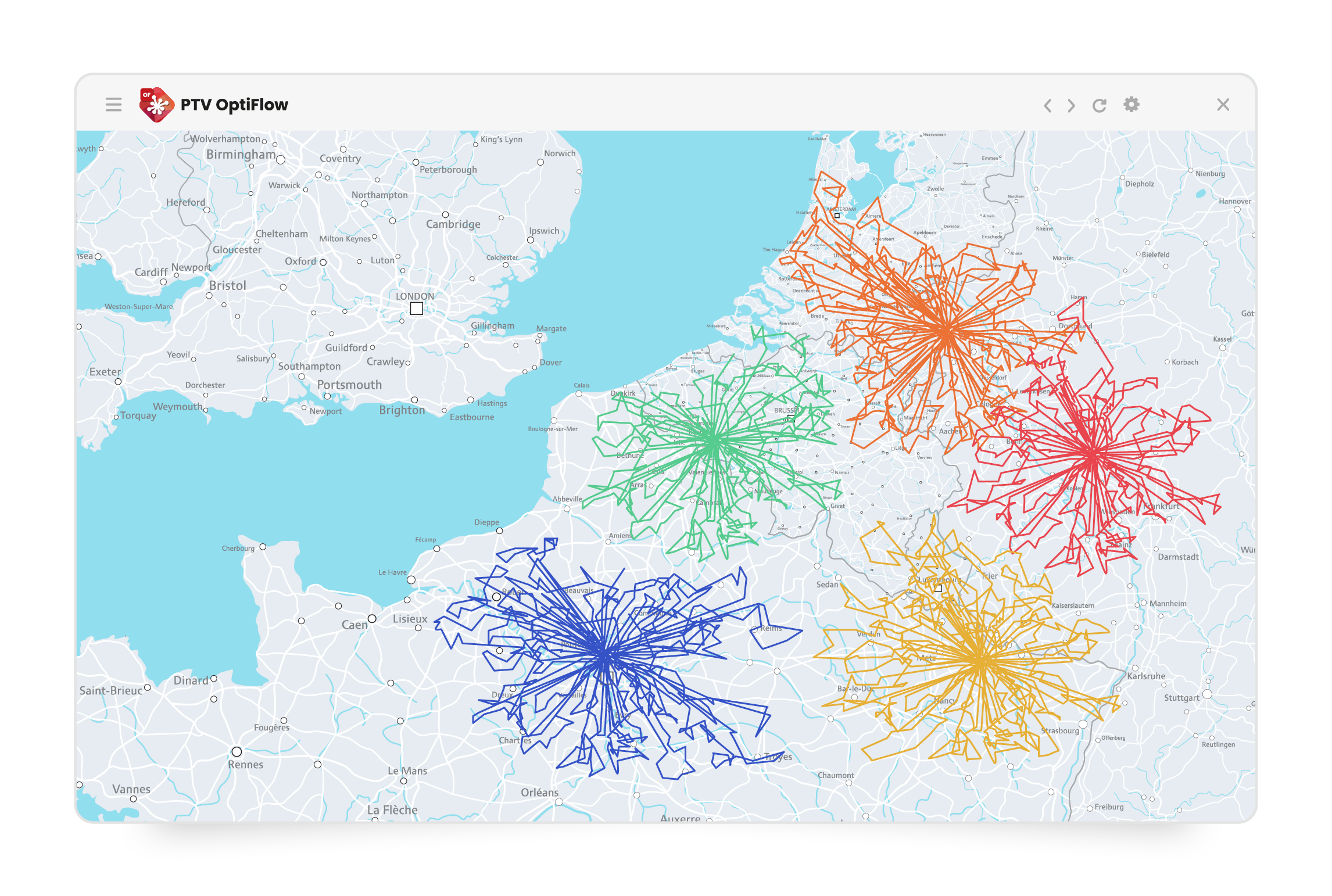
Well‑planned routes help fleets:
- Reduce unnecessary distance and detours
- Avoid congestion and stop‑start driving conditions
- Minimize idle time at delivery points
- Improve vehicle utilization and reduce empty miles
- Model alternative scenarios when fuel prices change
Unlike reactive adjustments, proactive route planning allows fleets to simulate different routing scenarios and understand their impact on fuel consumption and costs in advance. This makes it easier to balance service levels, operational constraints, and fuel efficiency.
Advanced route planning and optimization tools, such as PTV OptiFlow, support this approach by enabling fleets to evaluate routing decisions based on real‑world constraints and cost impacts — rather than relying on static routes or manual adjustments.
How to reduce fleet fuel costs beyond routing
Route planning is one of the most effective ways to influence fuel efficiency, but it is not the only factor that determines fuel spend. To achieve sustainable fuel cost reductions, fleets need a broader operational view that considers how vehicles are driven, monitored, and maintained, alongside planning decisions.
Addressing these additional factors helps ensure that fuel efficiency gains achieved through routing are not lost during execution:
1.Monitoring fleet fuel consumption
Regularly tracking fuel consumption by vehicle, route, and driver helps identify patterns that contribute to higher fuel usage. Trends are often more meaningful than individual data points.
2.Improving driving behavior through insights
Driver behavior significantly affects fuel efficiency, particularly in operations with frequent stops and variable driving conditions. Platforms that analyze driving patterns such as acceleration, braking, and idling help fleets understand where fuel inefficiencies occur and guide targeted improvements. This is especially relevant in last‑mile delivery and urban distribution, where stop‑and‑go traffic and short trip segments can amplify the fuel impact of driving behavior.
For a deeper look at how this works in practice, see how route optimization software for last‑mile operations can help reduce costs.
3.Vehicle maintenance and fuel efficiency
Poorly maintained vehicles tend to consume more fuel. Consistent maintenance practices help ensure engines, tires, and components operate efficiently, supporting lower fuel consumption over time.
4.How telematics systems improve fuel efficiency
Telematics systems help fleets improve fuel efficiency by providing visibility into vehicle performance and driving behavior. By monitoring factors such as idling, speeding, and route adherence, fleets can identify inefficiencies and take corrective action. Telematics data is most effective when combined with planning and optimization, allowing insights to inform future routing and operational decisions.
Fuel costs will continue to fluctuate, but fleets are not powerless. By focusing on planning, monitoring, and scenario‑based decision‑making, trucking fleets can reduce fuel spend and improve cost control — even in volatile market conditions.
Tools that support route optimization and scenario analysis can help fleets understand the real cost impact of operational decisions and identify where savings are achievable in practice.
Fleet fuel cost FAQs
How can fleets reduce fuel consumption?
Fleets can reduce fuel consumption by optimizing routes, minimizing empty miles, improving driving behavior, and maintaining vehicles properly. Monitoring fuel usage trends and linking fuel data to planning decisions helps identify recurring inefficiencies rather than isolated issues.
How does route planning impact fuel efficiency?
Route planning impacts fuel efficiency by reducing unnecessary distance, avoiding congestion, and minimizing stop‑and‑go driving before vehicles are dispatched. By optimizing routes upfront, fleets can lower empty miles, improve vehicle utilization, and reduce idle time at delivery points.
Route optimization software, such as PTV OptiFlow, supports this by simulating different routing scenarios and evaluating their impact on distance, drive time, and operational constraints. This allows fleets to balance service requirements with fuel‑efficient routing decisions before execution.
How should fleets monitor fuel consumption over time?
Fleets should monitor fuel consumption consistently by vehicle, route, and driver. Comparing planned versus actual fuel usage helps identify patterns and supports more informed operational adjustments over time.
What are effective strategies to reduce overall fleet operating costs?
Reducing fleet operating costs requires a combination of route optimization, improved vehicle utilization, proactive maintenance, and data‑driven planning. Fuel efficiency improvements often come from reducing kilometers driven, minimizing empty miles, and aligning resources more closely with demand.
Route optimization platforms such as PTV OptiFlow help fleets evaluate cost‑efficient delivery plans by accounting for real operational constraints, multiple depots, and mixed fleets. By supporting scenario‑based planning, these tools enable fleets to assess how changes in routing and resource allocation affect overall transport costs.