

If the last few years in the logistics space have predominantly been about recovery and stabilization, 2026 is the year of margin defense. Between the widespread rollout of carbon-indexed tolls and a labor market that remains incredibly tight, the cost per kilometer has become a volatile metric.
How can you maintain profitability when the external environment is working against you? The answer lies in identifying the drivers you can control and using strategic optimization to neutralize the ones you can’t.
1. Toll rises
European tolls are no longer just about distance; they are about emissions. In 2026, several European countries, including the Netherlands and Poland, have implemented significant hikes in toll fees for carbon intensive vehicles. Proposed plans by the European Commission also suggest further changes to toll charges are coming to speed up the transition to a low-carbon economy.
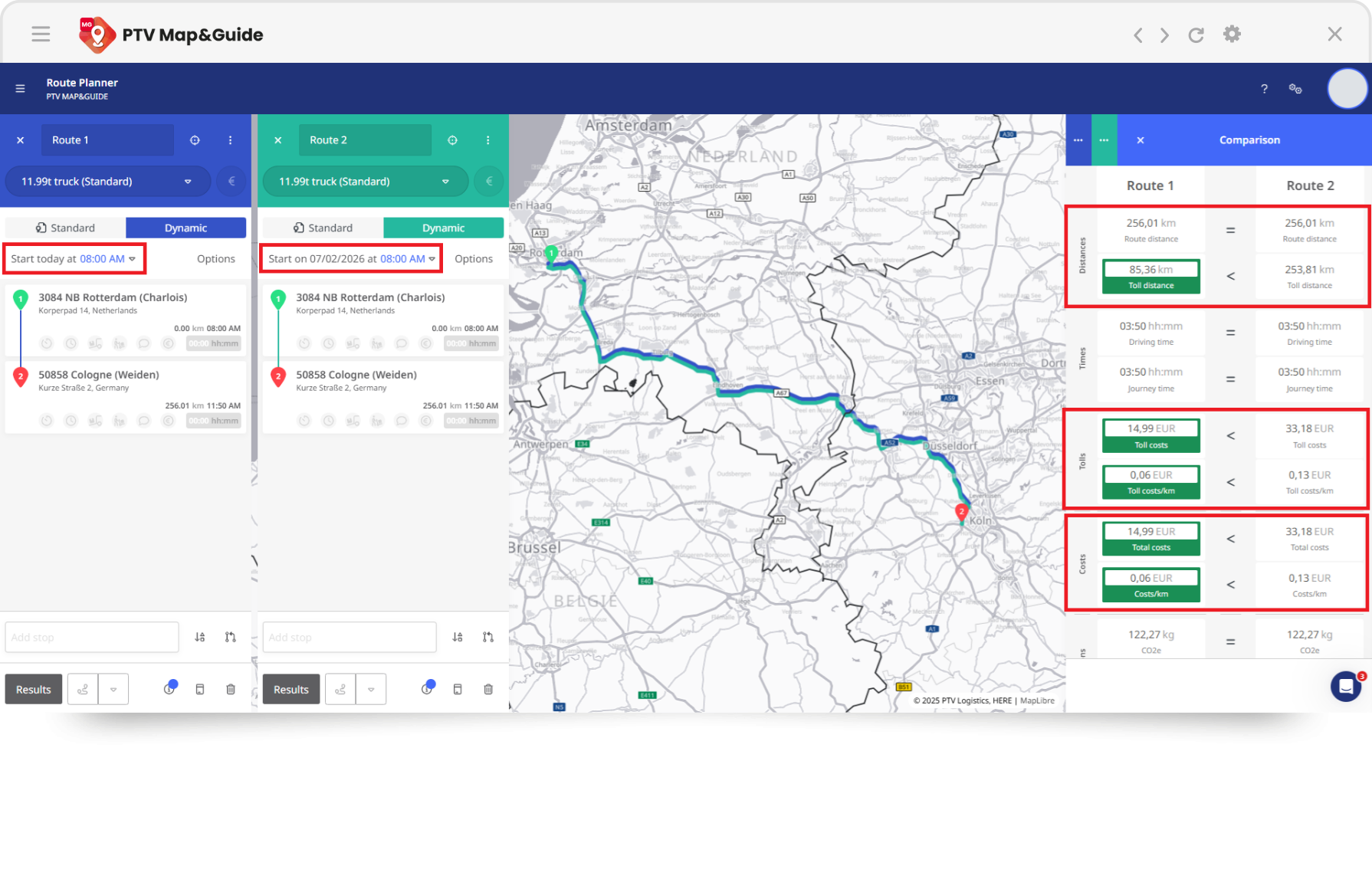
In the transport & logistics (T&L) sector, where long haul routes often cross multiple borders, green surcharges can shift a profitable journey into a loss-maker overnight. Advanced tools like PTV Map&Guide allows you to calculate the true cost of a route by weighing toll fees against fuel, time, and emissions, helping planners decide if a slightly longer, toll-free route is more cost-effective than a shorter one.
2. Driver shortages
A long standing issue, the shortage of qualified drivers continues to plague the sector. Recent estimates indicate that the European road freight industry had a driver shortfall of around 400,000 in 2020. Since then, various factors have exacerbated the issue, with demographics chief among them. 30% of the workforce is over 55, meaning that the cost (and urgency) of recruitment and retention has spiked.
Optimization is now a key retention tool. By using territory planning to create balanced, predictable workloads, organizations can reduce the respect gap that causes drivers to leave. For retail fleets, this means ensuring schedules are reliable even during seasonal peaks, directly lowering the high cost of turnover and retraining.
3. Electrification
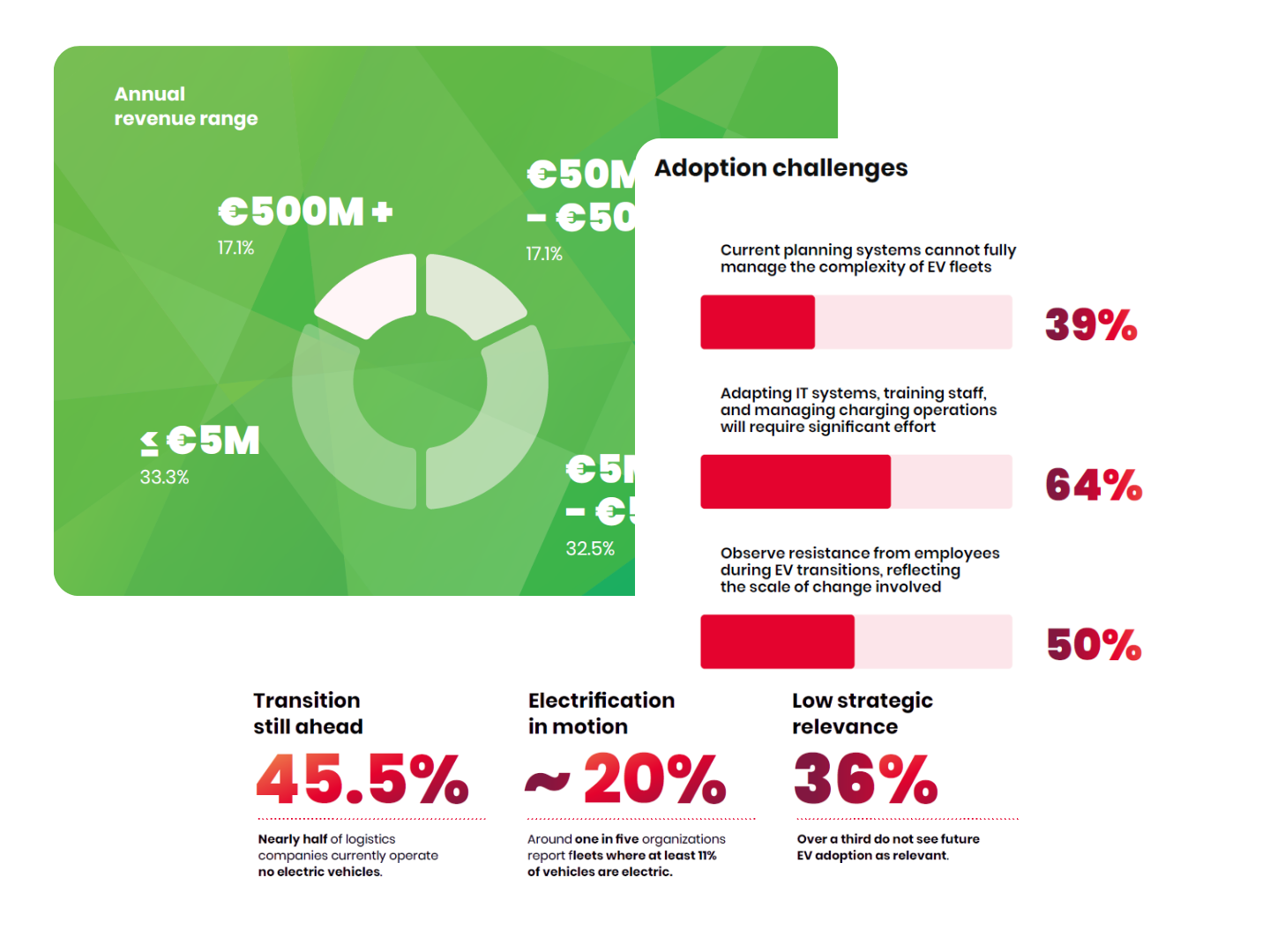
Electrification is gaining momentum in logistics but the reality is more complex than many expect. According to PTV Logistics’ latest 2026 EV Adoption in Logistics report, adoption is still at an early stage, with around 45% of logistics companies operating no electric vehicles at all. Cost remains the primary barrier, with only 30% of electric truck sales currently considered TCO‑competitive in Europe, while concerns around range, charging availability, and operational complexity continue to slow progress.
To keep electrification from becoming a cost driver, logistics teams need route optimization that accounts for battery range, charging constraints, and hybrid fleet operations—turning EV adoption into a controlled, cost‑efficient transition rather than an operational risk.
EV Adoption in Logistics Report
Want the full picture of EV adoption in logistics?
Drawing on industry-wide survey insights, this report highlights how organizations are assessing readiness, adapting operations, and making informed planning decisions under real‑world constraints.
Bonus: Find practical planning approaches, transition strategies, and EV‑specific tools logistics teams are already using to evaluate, plan, and move forward with electrification.
4. Urban Low-Emission Zones(LEZ)
Urban centers are beginning to present both opportunities and challenges for logistics organizations. Their higher population densities mean the potential for more lucrative routes, but their tighter sustainability regulations and the stricter delivery windows demanded by customers invariably add fulfillment pressures. As such, a delicate balancing act must be navigated to stop the last mile from becoming the most expensive mile.
Through smart sectorization, you can dynamically divide urban areas to match vehicle capabilities. A CEP firm can use this to automatically assign electric cargo bikes or small vans to LEZ-restricted sectors while keeping heavy assets on peripheral corridor routes, avoiding steep non-compliance fines and reducing urban congestion.
5. Delivery demands
The Amazon effect shows little sign of disappearing. Today, consumers expect one-hour or same-day windows as standard, which can create major challenges for organizations in the retail or CEP sectors. According to Wunderman Thompson’s The Future Shopper Report 2023, if consumers could change one thing about their delivery experience when shopping online, 48% would choose faster delivery. Evidently, speed is of the utmost importance. But speed comes at a cost.
Half-empty vans and inefficient emergency runs can increase the number of trips required to meet delivery demands, pushing up outgoings. Instead, advanced optimization allows for dynamic rerouting, where software adapts to new orders in real-time. This allows retailers to meet tight delivery windows by inserting urgent orders into existing tours without significantly increasing the number of vehicles or mileage.
Also related: How to build realistic home delivery routes: Best practices for CEP and Retail Logistics
6. A lack of visibility
Perhaps the most substantial cost driver for the logistics organization is a lack of visibility. Without real-time insight into what is happening on the road, logistics leaders are forced to manage by guesswork or lagging indicators. Bottlenecks may only be discovered after an invoice arrives or a customer complains.
A lack of visibility also leads to reactive spending. For a T&L provider, failing to leverage real-time data means failing to spot a carrier overcharge or missing a detention fee dispute until it’s too late to challenge it. In the retail sector, poor visibility results in labor waste, with workers – drivers or warehouse personnel – sitting idly waiting for a delayed truck, while hourly costs rack up. By bridging the gap between planning and execution, optimization software ensures cost models match reality.
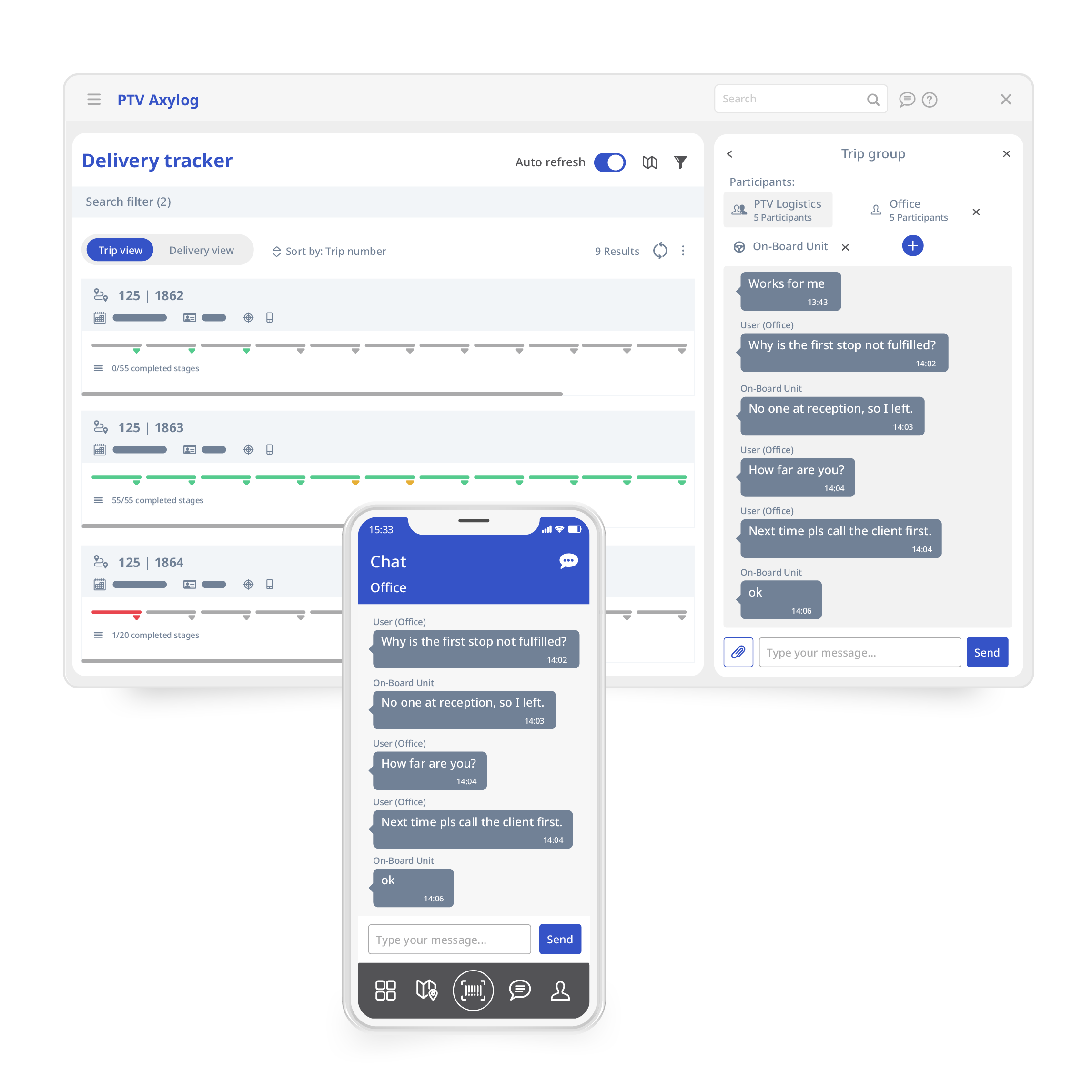
By bridging the gap between planning and execution, transport execution platforms such as PTV Axylog provide real-time tracking, status updates, and data transparency across the delivery chain. This ensures that cost models reflect operational reality and that issues are addressed before they turn into avoidable expenses.
FAQ: Common 2026 transport cost questions
How does PTV OptiFlow differ from standard GPS or basic routing software?
A GPS tool may find you the shortest path for one vehicle, but PTV OptiFlow optimizes your entire fleet simultaneously and is tailored specifically for your logistics operations. It will account for thousands of factors like driver hours, vehicle size, toll costs, and customer time windows to find the cheapest total solution regardless of whether your fleet is large or small, fully electric or mixed.
Why has territory planning become so important?
With rising fuel and labor costs, logistics planners can no longer afford to work with static territories. Dynamic territory planning allows them to restructure their service areas based on current demand, ensuring their resources are always deployed where they generate the highest margin.
Solutions like PTV OptiFlow support this approach by helping teams model different territory scenarios quickly and balance workloads more effectively—especially for electric or mixed fleets with varying range and capacity constraints.
What is the best way to handle rising toll costs?
The most effective way to manage increasing toll charges is to use planning software that applies up‑to‑date toll data directly in your route calculation. With PTV Map&Guide, tolls become a true variable cost in your planning process. The software automatically factors in country‑specific toll fees, emission‑based pricing, vehicle classes, and upcoming toll changes—so planners can instantly compare alternative routes.
This ensures you avoid unnecessarily expensive road sections and only pay higher tolls when they are essential for on‑time delivery. By giving you full transparency into the true cost of every route, PTV Map&Guide helps fleets consistently choose the most cost‑effective option.
Can route optimization really help with driver retention?
Absolutely. Poorly planned routes can exacerbate stress, frustration, and burnout for drivers, making it more likely they’ll look for a role elsewhere. Better optimization means less time stuck in traffic and more predictable shift patterns, which is a major competitive advantage in a tight labor market.
Want to see this in action?