
In 2026, the logistics landscape has shifted. While demand for delivery remains high, many companies are finding that sector-wide growth isn’t necessarily being reflected in their bottom lines. If your sales are up but your margins are down, rising costs are likely to blame.
Why are transport costs rising in 2026?
While inflation remains a critical concern – a McKinsey Global Survey from late last year found that it remained one of the top five perceived risks among executives – the primary drivers of logistics expenses are structural, rather than macroeconomic.
- Rising toll fees: trans.INFO reports that toll fees are increasing in many European countries, often due to stricter regulations around CO₂ emission levels. With the expansion of CO₂-based road tolls across Europe, every kilometer now has a carbon cost. For a Transport & Logistics (T&L) provider, an unoptimized route is no longer just a waste of fuel; it is a regulatory liability.
Want to see an example of how toll fees are changing across Europe, often incorporating carbon emission mandates? If you’re a logistics company that operates in the Dutch market, you’ll find this blog helpful:
Dutch Truck Toll 2026: What’s Changing and How It Affects Your Logistics Costs
- Labor shortages: A fall in driver numbers is causing T&L firms to boost salaries in an effort to retain workers. Demographics are certainly a part of the problem – the average European truck driver is 47 years old, 30% are over 55, and only 5% are under 25. In addition to offering higher wages, retaining talent in 2026 also means offering better work-life balances for drivers.
- Urban access restrictions: In the retail sector, low- or zero-emission zones have fragmented delivery networks. Navigating these zones without precise planning leads to steep fines and expensive last-mile detours. What may look like a simple journey on a static map may ultimately be fraught with unexpected costs.
How can route optimization reduce fuel and toll costs?
The most effective way for T&L firms to protect their bottom lines is to move from reactive planning to strategic optimization.
Route optimization reduces mileage by using intelligent algorithms to sequence stops in the most logical order, with a recent university study showing the impact it can have on reducing distance travelled and fuel consumption. Furthermore, it improves vehicle utilization by ensuring every truck in your fleet is loaded to its optimal capacity, allowing you to fulfill more orders with fewer assets.
Crucially, advanced route optimization also supports toll-cost decisions by calculating the financial trade-off between a shorter toll road and a longer toll-free route, factoring in fuel and labor time to ensure you always take the most cost-effective path.
Also related: How route optimization software for last mile operations reduces costs
What is strategic optimization?
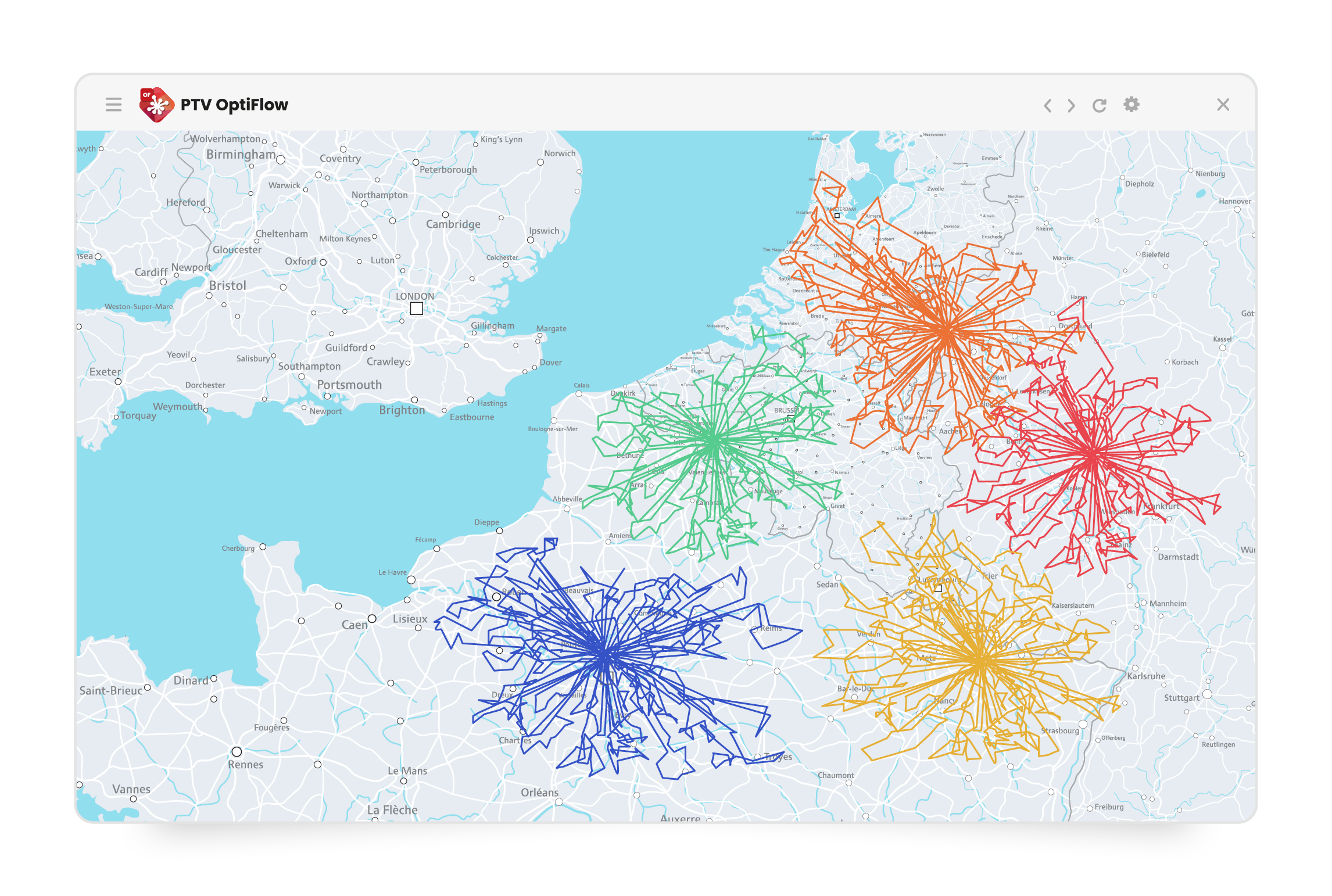
Strategic optimization means looking at the big picture. Instead of simply asking, “What is the shortest route today?”, it requires logistics leaders to answer a different question: “What is the most profitable way to use my entire fleet this month?”
As an example, a carrier in the T&L sector could use strategic optimization to identify that consolidating three separate long-haul lanes into a single hub-and-spoke model would significantly reduce total CO₂ exposure, saving thousands in monthly carbon-weighted tolls.
How does smart sectorization improve efficiency?
Another component of route optimization, smart sectorization involves dividing your service area into dynamic sectors based on real-time demand rather than fixed zip codes.
Looking at the CEP (Courier, Express, Parcel) space, it’s easy to see how smart sectorization can drastically reduce transport costs. By applying smart sectorization, a parcel firm can automatically adjust driver territories during peak delivery windows. This prevents driver overlap (where two vans are on the same street at the same time), eliminating unnecessary trips and slashing urban fuel consumption.
What is the best way to implement territory planning?
Increasingly, logistics providers are finding that one of the most effective ways to implement territory planning in 2026 is to use data-driven algorithms, efficiently balancing workload and cost. Unlike manual initiatives, this approach constantly adjusts for order density and driver availability. The adoption of sophisticated data-driven strategies is already having a major impact on logistics in the retail sector.
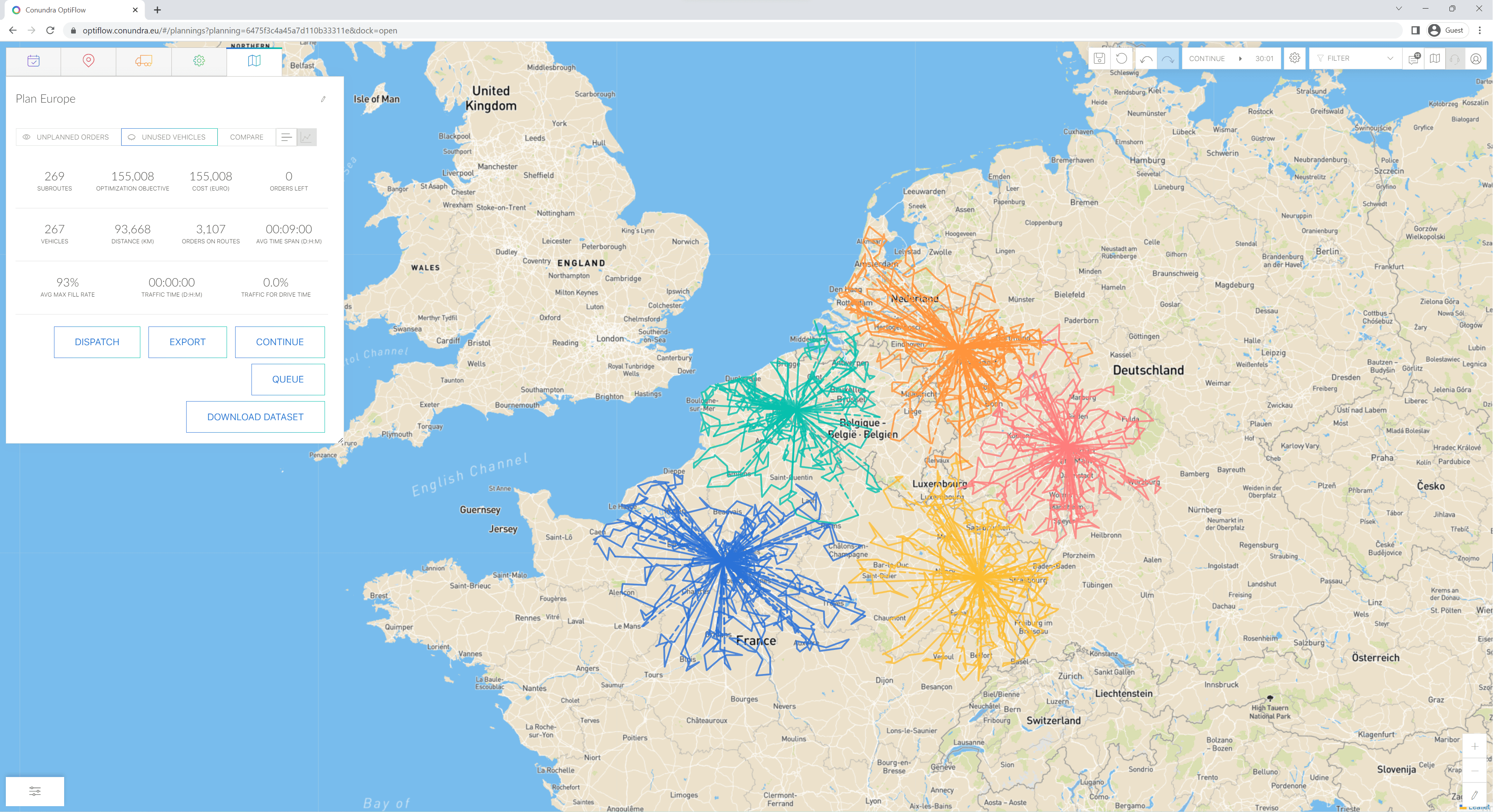
For instance, a grocery store may take this approach to analyze time-of-day traffic and order volumes, allowing it to reduce its fleet requirements while continuing to maintain 100% on-time delivery rates. Moreover, this data could also be leveraged by AI tools to further optimize deliveries. This is likely to represent a significant advantage in the sector for years to come, with 75% of retailers predicted to use AI as part of their supply chain management by 2028.
By employing a cloud-based optimization engine like PTV OptiFlow, planners can run “what-if” scenarios as part of their territory planning. This allows them to see the true cost of changing territory boundaries or adding new delivery windows before they deploy a single vehicle. Whether driven by AI or simply advanced data-driven tools, technology should only be in place to augment the strategy created by human logistics managers – driving down mileage and transport costs.
FAQ: Common 2026 transport cost questions
Why is route optimization better than manual planning for reducing costs?
Manual planning cannot account for the thousands of variables in today’s logistics space, such as fluctuating CO2 toll rates, driver rest-time regulations, and EV charging stops. Route optimization software processes these variables in seconds to find the absolute lowest-cost path.
For a deeper understanding of how modern route optimization methods address these variables and improve planning accuracy, you can explore our detailed overview of the topic here.
How does reducing empty miles impact my carbon tax?
In 2026, many European tolls are calculated based on a vehicle’s CO2 class and distance. By eliminating empty miles through better backhaul planning, you directly reduce the taxable distance, lowering your total toll bill.
How can I reduce my transport costs in 2026 without adding more vehicles or drivers?
You can lower transport costs in 2026 by improving how you plan and use the fleet you already have. Advanced route optimization software helps you reduce mileage, avoid unnecessary toll roads, balance driver workloads, and increase vehicle fill rates. With a tool like PTV OptiFlow, you can automatically calculate the most cost‑efficient routes, cut CO₂‑based toll fees, eliminate empty miles, and complete more deliveries with the same resources without hiring additional drivers or expanding your fleet.
Can software like PTV OptiFlow handle different industry needs?
Yes. Whether it’s the high-density requirements of CEP, the strict time windows of retail, or the complex backhauling of the T&L sectors, PTV OptiFlow is designed to handle industry-specific constraints to maximize margin. Its high-performance algorithms ensure your operations are based around the optimal number of vehicles, kilometers, and working hours.