

If you are designing or redesigning your distribution network, there are two main approaches to consider. Your first option is the classic hub-and-spoke network. It can give your team control and consolidation, but it may also add more distance and delay. Then there’s flexible distribution network planning. This option can help you respond faster to changing demand, while also automatically factoring in complexity that manual tools cannot control reliably.
Choosing between hub-and-spoke vs flexible network planning is important, because it affects the way your team manages cost-to-serve, service reliability, fleet use, driver rules, depot workload and emissions. Before choosing a new design approach for your network, it helps to compare the pros and cons of all your options, so you can choose the setup that gives your team the right balance of control, flexibility and stability.
Key takeaways
- Hub-and-spoke wins on consolidation, not automatically on cost. Fuller linehaul vehicles lower cost per shipment on trunk routes, which is why CEP, LTL and pallet networks lean on the model but every extra hub pass adds distance, handling and risk, and can hide the real cost-to-serve behind an efficient-looking average.
- Flexibility only pays off with clear decision rules behind it. Giving planners more paths — direct delivery, an alternate depot, a temporary cross-dock — protects service and cost on specific lanes. Without governance, planners fall back on blunt defaults like “always use the nearest depot,” which erases the advantage.
- Most networks should be hybrid, not one or the other. Keep hub-and-spoke for stable, high-volume flows; add direct routes or dynamic depot allocation for regional density, peaks, new markets or time-critical lanes.
- The real decision factors are the service promise, demand stability, and hard constraints — driver hours, vehicle access rules, depot capacity — not which model sounds more modern.
- Spreadsheets and static territory maps can’t model how these constraints interact at scale. That’s specifically where optimization-first software changes the calculus: PTV OptiFlow for multi-depot scenario testing, PTV Mira for plain-language scenario answers, and PTV Developer for building constraints like truck restrictions and emissions data directly into the plan.
- Judge your own network on cost-to-serve, on-time delivery, fleet utilization, empty kilometers and planner time — not just average distance or trunk transport cost.
The rest of this article walks through the full pros-and-cons breakdown for each model, a side-by-side comparison table, a decision framework, and a checklist you can run against your own network today.
Why your distribution network design matters more than ever
Your distribution network design affects almost every transport decision your team makes. It defines which depot serves which area, how goods move between hubs, how linehauls connect with local tours, how quickly customers can receive orders and how much manual work planners need to keep the network running.
In logistics-driven industries like retail, CEP and transport and logistics, customer delivery windows have become tighter, urban restrictions have become stricter and delivery volumes can shift quickly between regions. A network that worked well five years ago may now create unnecessary hub passes, unbalanced depot workloads or routes that look efficient on a map but fail once driver hours, loading times and vehicle access rules enter the plan.
Cost, service and resilience: The network design trilemma
Your network design shapes three connected outcomes: cost, service and resilience. For example, lower transport cost can come from fuller vehicles, better depot allocation and fewer unnecessary kilometers. Stronger service comes from shorter route duration, realistic cut-off times and delivery plans that account for time windows, unloading time and traffic patterns.
Resilience comes from your ability to handle disruption without rebuilding the plan from scratch. If one hub reaches capacity, a depot closes early or a driver shortage hits a region, your planners need workable alternatives. The best design gives your team room to protect service levels without pushing every exception into manual planning.
From static networks to adaptive planning
Many organizations still run networks built around old demand patterns, fixed territory maps and long-standing depot rules. Those rules may feel familiar, but they can hide cost and service problems. A store replenishment area may have grown beyond the original depot boundary, a parcel region may now have stronger local density than before or a cross-dock may create more handling than value for certain lanes.
Adaptive logistics network planning helps your team test those assumptions with data. Instead of relying on static zones, your planners can compare route duration, vehicle use, service levels, emissions and cost per stop across different network options. That gives you a clearer view of when to change distribution network structure and when to improve the daily plan within the current design.
What is hub-and-spoke network planning?
A hub-and-spoke network uses one or more central hubs to consolidate, sort and redistribute goods to regional depots, local delivery areas or customers. From a planner’s perspective, the model creates structure. Goods move along defined linehaul routes, pass through hubs or spokes and then continue through local distribution networks.
This structure can work well when volumes are high, flows are predictable and consolidation creates clear transport savings. It becomes harder to manage when demand varies sharply by region, customer lead times shorten or some lanes would perform better without passing through a hub.
Core concept and typical structure
In a hub-and-spoke network, central hubs connect multiple regions. Goods may move from suppliers, factories or fulfillment centers into a hub, then out to depots or spoke locations for final delivery. In larger networks, several hubs may connect through scheduled linehauls, with regional depots handling last-mile distribution.
The planning task involves more than drawing lines between facilities. Your team needs to align hub cut-off times, loading slots, sorting capacity, vehicle classes, driver hours and local delivery windows. A small change in one part of the network can affect departure times, route start times, depot workload and on-time delivery rates elsewhere.
Where hub-and-spoke networks are common
Courier, Express and Parcel networks use hub-and-spoke structures to consolidate parcels, sort them at scale and move them through national or regional trunking lanes. Pallet networks and LTL operators also rely on this model because consolidation helps fill linehaul vehicles and manage many small consignments efficiently.
Retail and eCommerce networks may use regional distribution centers to supply stores, click-and-collect points or local delivery zones. The model gives planners clear flows and predictable handovers, especially when stores, depots and delivery rounds follow stable schedules.
How planners actually operate a hub-and-spoke network
Planners in hub-and-spoke operations manage linehaul schedules, feeder routes, hub capacity and local tours together. They need to decide which volumes move through which hub, when trucks should depart, how long loading and unloading will take and whether local delivery teams can still meet customer time windows after the goods arrive.
If your organization uses different types of vehicles, it adds more complexity to your planning. A linehaul vehicle may handle long distances efficiently, but it may not fit urban delivery restrictions, low-emission zones, weight limits or access rules near final delivery points. Network optimization in logistics needs to account for those details because an efficient trunk route can still create an expensive last-mile problem.
What is a flexible network in logistics?
A flexible network in logistics gives your team more than one route or depot option for moving goods from origin to destination. It does not mean uncontrolled planning or constant improvisation. A flexible distribution network still needs rules, constraints and clear decision logic so planners can choose the most efficient flow.
In practice, flexibility may mean serving an order from more than one possible depot, bypassing a hub for certain lanes, using temporary cross-docks during peak periods or sending direct routes when volume density justifies it. The value comes from choosing the right path for the shipment, the customer promise and the operating conditions.
From fixed hubs to adaptive flows
Flexible network planning gives your team more ways to move goods. Some shipments may still go through a hub because consolidation makes sense. Others may move directly from a depot to a customer cluster because the extra hub pass adds distance, handling and delay.
This is especially relevant for hub-and-spoke vs point-to-point decisions. Point-to-point flows can reduce lead time and handling on selected lanes, but they can also reduce vehicle utilization if planners create too many direct moves with low load factors. A hybrid model helps your team keep the stability of hub-based flows while using direct or lateral movements where the data supports them.
Typical flexible network patterns
Flexible networks can take several forms. Dynamic depot allocation lets orders move from the depot that can meet the service promise at the best overall cost. Ad hoc cross-docking gives your team temporary consolidation points during peak periods, regional campaigns or new market launches.
Some operations use elastic capacity through 3PL partners or subcontractors when their own fleet capacity reaches its limit. Others use regional consolidation for most flows and direct shipments for high-volume customers, urgent orders or lanes with strong delivery density. This kind of hybrid logistics network design works best when your planners can test the impact before making it part of daily operations
Planner workflows in a flexible network
Flexible networks ask more of your planning process. Your planners need to compare multiple depot options, routing paths, vehicle types and service rules for the same order set. They also need to rebalance routes when volume changes during the day or when a depot, vehicle or delivery area reaches capacity.
Manual planning often causes bottlenecks here. The choice between dynamic routing vs static routes depends on whether your network needs daily adaptation or predictable repeatability. Many operations need both: stable rules for the bulk of volume and dynamic decisions for exceptions, peaks and lanes where a different routing path delivers better cost or service.
Pros and cons of hub-and-spoke networks
A hub-and-spoke network gives your team structure, consolidation and predictable flows. It can reduce complexity when demand patterns stay stable and when central hubs have the capacity to handle volume efficiently. On the downside, the same structure may add distance, handling or delays that can affect your service levels.
Advantages of hub-and-spoke
The main advantage of hub-and-spoke planning is consolidation. Fuller linehaul vehicles can lower transport cost per shipment and improve fleet utilization on trunk routes. For CEP, LTL and pallet networks, that can make the model very efficient because many small shipments can move through a common sorting and transport structure.
The model also helps standardize work. Hub cut-offs, linehaul schedules, depot responsibilities and local delivery tours can follow repeatable patterns. When volumes and flows remain predictable, planners can manage the network with fewer daily design changes and a clearer view of where each shipment should go.
Disadvantages and hidden costs of hub-and-spoke
Hub-and-spoke networks can create hidden costs when goods travel through a hub even though a direct or regional move would perform better. The extra distance may increase fuel use, toll costs, driver hours and route duration. The extra handling can also raise damage risk and create delays during peak periods.
A central hub can also become a network risk. If sorting capacity is tight, loading times slip or a disruption affects the hub, the impact can spread across many routes and regions. This is why cost-to-serve analysis in logistics should look beyond average linehaul cost and include handling, lead time, service reliability, depot workload and exception management.
When hub-and-spoke starts to break down
A hub-and-spoke model starts to strain when demand becomes less predictable, time windows become tighter or certain regions develop enough volume density for direct flows. Retail and e-grocery teams may see this when urban delivery zones need smaller vehicles, tighter delivery slots and more frequent replenishment. CEP teams may see it when parcel density shifts toward new residential areas or micro-fulfillment points.
City access rules can add another layer. Large trunk vehicles may work well between hubs but create problems near urban depots or final delivery areas. If your planners have to keep overriding the standard hub route to meet service levels, your network model may need a fresh comparison.
| Metric | Hub-and-Spoke | Impact |
|---|---|---|
| Average Distance | Can be efficient on consolidated trunk lanes, but may add detours for some flows. | Lower linehaul cost may hide higher total distance on selected lanes. |
| Lead Time | Predictable when cut-offs and sorting work smoothly. | Extra hub passes can make same-day or narrow time windows harder. |
| Planning Complexity | Easier to standardize when flows are stable. | Less flexible when demand shifts by region or customer segment. |
| Resilience | Strong central control. | Hub disruption can affect many routes and depots. |
| Cost-to-Serve | Strong for high-volume consolidated flows. | Can rise for regional clusters that would work better with direct routes. |
Pros and cons of flexible network planning
Flexible network planning gives your team more options, but those options need effective control. The value comes from matching each shipment or lane to the flow that best fits cost, service, vehicle availability and constraints. Without clear, data-driven optimization logic, flexibility can turn into inconsistent decision-making and extra planning work.
Advantages of flexible networks
A flexible distribution network lets your team choose whether an order should move directly, through a hub, through a cross-dock or from a different depot. That can reduce cost-to-serve for specific routes, especially where regional customer density makes direct delivery more efficient than consolidation.
Flexibility also helps your team respond to demand spikes, depot constraints or service changes. If a region suddenly receives more orders, your planners can test whether another depot can support the area without breaking driver hours or delivery windows. For last mile network design, that can help you keep deliveries on time as customers expect faster, narrower or more reliable delivery slots.
Challenges and risks of flexible networks
The main risk of flexibility is complexity. More depot choices, more routing paths and more service rules create too many combinations for manual planning alone. Planners may fall back on simple rules such as “always use the nearest depot” or “always route through the hub”, even when those rules produce higher cost or weaker service.
Flexible planning also needs good governance, meaning clear rules for how your team makes planning choices. If each planner makes ad hoc decisions without shared logic, your network can become harder to control. The better option is the one your team can run reliably, repeat consistently and explain clearly to finance, operations and customer service stakeholder
Why optimization-first planning is critical for flexibility
Flexible networks need logistics network optimization software that can compare real operational choices under real constraints. That includes multi-depot allocation, truck attributes, time windows, driver hours, loading times, cross-docking options and multi-leg flows. Basic routing tools may plan a route, but they may not explain whether the shipment should have moved through a hub, another depot or a direct route in the first place.
For high-volume operations, PTV OptiFlow gives planners a practical way to test and run complex route plans with constraints included from the start. Your team can compare depot assignments, route duration, vehicle use and service outcomes across thousands of stops, then use the results to improve daily planning rather than relying on averages. In practice, that shows up as measurable results: teams running PTV OptiFlow have reduced transport costs by 10–30% and planning time by 60–80%, while keeping up to 95% of routes feasible on the first pass.
HelloFresh, for example, cut delivery costs by 16% after adopting PTV OptiFlow for its home-delivery network.

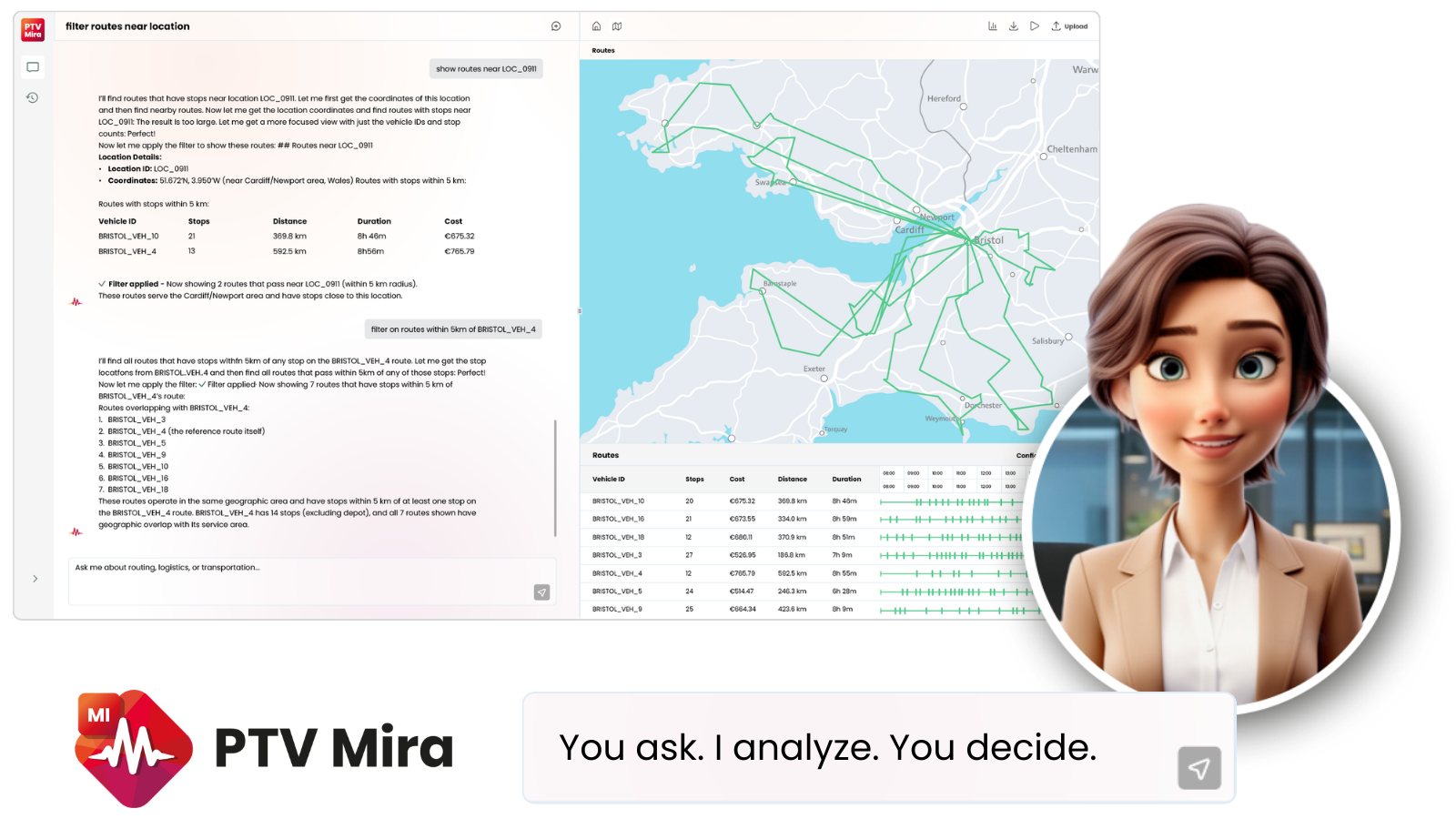
For teams that want to ask scenario questions in plain language, our AI logistics agent PTV Mira is built as decision support, not a replacement for planner judgment — it turns a question like “what happens to cost-to-serve if we bypass the hub on this lane” into a clear, evidence-based answer in minutes, tailored to your own network, fleet and constraints, and drawing on more than 40 years of route optimization expertise.
Hub-and-spoke vs flexible network: How to choose what fits your operation
The right network model depends on your volumes, geography, service promises, depot footprint and planning capability. Hub-and-spoke can work very well when flows are stable and consolidation creates clear value. A flexible or hybrid model may work better when your customer base, service levels or regional demand patterns change regularly.
It is helpful to compare the pros and cons, and then test how each model affects cost, service, emissions, fleet use and planner workload.
| Dimension | Hub-and-Spoke | Flexible Network |
|---|---|---|
| Core Structure | Central hub(s) consolidate and redistribute all flows. | Multiple possible paths per shipment — hub, direct, cross-dock or alternate depot. |
| Best Fit | High, stable, predictable volumes; consolidation-heavy CEP, LTL and pallet networks. | Variable demand, mixed B2B/B2C customers, uneven regional density. |
| Cost Driver | Fuller linehaul vehicles lower cost per shipment on trunk routes. | Fewer unnecessary hub passes lower cost-to-serve on specific lanes. |
| Control & Governance | High — centralized rules, predictable, repeatable flows. | Needs clear decision logic; without it, flexibility becomes inconsistent ad hoc planning. |
| Resilience | A single hub disruption can affect many routes and regions. | Alternate paths let your team absorb disruption without rebuilding the plan. |
| Planning Complexity | Lower — standardized cut-offs, linehauls and routing. | Higher — more depot and routing combinations to evaluate per order set. |
| Technology Needed | Works with simpler routing or TMS tools. | Needs multi-depot, multi-leg optimization, e.g. PTV OptiFlow. |
| Typical Use Case | National parcel/pallet trunking, stable B2B replenishment. | Same-day/urban delivery, seasonal peaks, new markets, M&A network integration. |
Key questions to evaluate your network model
Start with the service promise. Do customers expect next-day, same-day, fixed delivery windows or scheduled store replenishment? A network that works for weekly B2B replenishment may struggle with narrow consumer delivery slots.
Then look at demand stability. Are your volumes and destinations predictable, or do they shift by season, promotion, region or customer segment? Your team should also review the number of depots and hubs, the distance between them and the constraints that define the work, including vehicle restrictions, labor rules, urban access limits and depot opening hours.
Factors that favor hub-and-spoke
Hub-and-spoke planning is usually a good fit for high-volume lanes between fixed regions. If your network has strong central sorting capability, predictable flows and enough volume to fill trunk vehicles, consolidation can create a clear cost advantage.
It also suits operations with less time-critical B2B deliveries, regular replenishment cycles or established linehaul schedules. In those cases, the structure can reduce planning variation and make operational control easier. The key is to confirm that the savings from consolidation still outweigh extra handling, route distance and hub workload.
Factors that favor a more flexible or hybrid network
A more flexible model may fit better when customers cluster strongly in certain regions or when direct routes can avoid unnecessary hub passes. It can also help when your network serves both B2B and B2C customers, each with different time windows, vehicle needs and delivery expectations.
Frequent network change also favors flexibility. New depots, new regions, M&A activity, seasonal peaks and changing retail formats can make fixed network rules harder to maintain. Transportation network modeling helps your team test these changes before they affect live delivery work.
Practical hybrid approaches
Many operations do not need to choose one model for every flow. A hybrid approach can keep hub-and-spoke flows for predictable consolidated volume while allowing direct routes, lateral depot flows or alternative depot allocation where the data supports it.
For example, a retail network may keep regional hub flows for standard replenishment but use direct routes for high-volume stores during peak trading periods. A CEP network may retain national trunking while testing regional bypass routes where parcel density and cut-off times make the hub pass inefficient. Route optimization for multi-hub operations helps planners compare those options without turning every decision into manual analysis.
Why simple tools are unreliable for distribution network design
Spreadsheets, static territory maps and basic TMS routing can support simple planning tasks, but they are not built to support network design and scenario planning at scale. They may show average distance, depot counts or historical order volumes, but they cannot reliably model how constraints interact across your network.
This creates a gap between the question leaders ask and the answer planners can provide. “Should we stay hub-and-spoke, move to a more flexible model or run a hybrid network?” cannot be answered with simple averages when truck attributes, time windows, hub capacity and driver hours shape the real plan.
Knock-on effects planners struggle to see manually
Changing one hub or depot can affect the full plan. A new hub location may shorten some linehauls but push local routes beyond driver hours. Closing a depot may reduce property cost but increase route duration, fuel use and missed time windows in nearby regions.
These effects are hard to calculate manually because they interact. Depot allocation changes route start times. Route start times affect delivery windows. Delivery windows affect vehicle use, driver schedules and customer service. It is more effective to give you team modeling that shows these connections before money goes into buildings, fleet or operating changes.
When it’s time to upgrade to optimization-first network planning
Your team may need optimization-first planning when network growth, new markets, peak-season disruption or changing service promises keep exposing the same weak points. Another sign is that leadership asks for a business case and planners cannot answer with current tools.
That business case may involve opening a depot, closing a hub, changing delivery territories, adding cross-docks or investing in new planning software. Logistics network optimization software helps your team compare scenarios quickly, repeat the analysis and explain the trade-offs with data. That makes the discussion more relevant for operations, finance and leadership.
How PTV Logistics supports both hub-and-spoke and flexible networks
PTV Logistics helps teams connect strategic network choices with the daily routing work that shows whether the design can run in practice. A network model only gives your planners value if they can turn it into workable routes, balanced depots and reliable service.
Your team can test hub-and-spoke, flexible and hybrid options using the same operational details that shape daily transport. That includes truck-specific routing, time windows, depot capacity, driver rules, loading times, cross-docking and multi-depot complexity.
Network design and scenario simulation at scale
Network design decisions need scenario simulation before they reach the live operation. Your team may need to compare opening a depot, closing a hub, regionalizing a delivery area or moving from next-day to same-day service in selected cities. Each scenario should show the impact on routes, linehauls, fleet use, emissions, planning time and service levels.
PTV OptiFlow can help planners test high-volume scenarios using real routing logic rather than rough averages. For larger teams, that means thousands of stops, complex trips and multi-depot plans can be compared in a repeatable way. Our AI logistics agent PTV Mira can then help teams explore the results through plain-language questions and answers, such as which depot change reduces cost-to-serve without hurting delivery reliability — again, as decision support that speeds up the comparison, not a substitute for the planner making the final call.
Multi-depot and multi-leg route optimization
Hub-and-spoke, flexible and hybrid networks all depend on good multi-depot route planning. Your team needs to know which hub or depot should serve each order, which shipments should move through linehaul, where cross-docking makes sense and how local tours should be built after goods arrive.
PTV OptiFlow helps planners model those choices with constraints included. This is the specific problem PTV OptiFlow’s integrated depot optimization is built to solve — matching each order to the depot and route combination that performs best across the network, not just within one depot’s boundary. That gives your team a clearer view of route duration, vehicle requirements, depot workload and service performance. It also supports middle mile optimization and last-mile planning in one connected workflow, which helps reduce the gap between network design and daily execution.
From design to execution: Integrations and visibility
Network planning needs to seamlessly lock into the systems your team uses every day. TMS, WMS, ERP and order systems hold the data that defines demand, stock, delivery windows, customer requirements and transport work. Planning outputs also need to return to those systems so dispatch, customer service and operations teams can act on the
PTV Developer gives IT teams modular APIs for routing, geocoding, mapping, matrix routing, ETAs, truck restrictions and emissions calculations including a reachable-areas calculation that computes the zone reachable from any starting point, such as a depot or hub, within a set drive time or distance. That helps your organization build planning and execution logic into existing workflows instead of forcing planners to work around disconnected tools, strengthening the feedback loop between operational data and future network design.

Planner-friendly workflows and time-to-value
Powerful modeling only helps if planners can use it without waiting for specialist studies every time the network changes. Your planners need workflows that let them set up scenarios, adjust constraints, compare results and explain the outcome to stakeholders.
The goal is not to replace planner judgment. The goal is to give planners a faster, more reliable way to test options and repeat good decisions. When software handles the heavy calculation, planners can spend more time reviewing trade-offs, managing exceptions and improving the network step by step.
Measuring the ROI of changing your network design
ROI for network change should come from measurable improvements, not broad efficiency claims. Your team should compare the current network against realistic alternatives and track the metrics that connect planning choices with business impact.
That means looking at cost, service and workload together. A lower-cost design that hurts service levels may not work. A high-service design that adds too much manual planning effort may fail during peak periods. The right comparison shows the balance your operation can run consistently.
Core KPIs to track
Useful KPIs include transport cost per stop or shipment, cost-to-serve per region or customer segment, on-time delivery rate, SLA compliance, fleet utilization, empty kilometers, route duration and planning time per day or week.
Your team should also track depot workload and vehicle balance. If one depot keeps reaching capacity while another has spare vehicles, the network may have an allocation issue rather than a pure fleet issue. Emissions can also belong in the KPI set, especially when your operation faces ESG targets, low-emission zones or customer reporting requirements.
Where the savings typically come from
Savings usually come from better allocation and fewer unnecessary moves. That may mean assigning orders to a depot that reduces total route time, avoiding a hub pass on selected lanes or changing delivery territories so vehicles run fuller with less distance.
Savings can also come from the right vehicle mix. A smaller urban vehicle may improve access and service in dense areas, while a larger linehaul vehicle may reduce cost between hubs. Planner productivity can also improve when the team runs repeatable scenarios instead of rebuilding routes and territories manually in spreadsheets.
Building a business case for network optimization software
A practical business case starts with a baseline. Your team should capture current cost per stop, on-time performance, route duration, empty kilometers, vehicle use and planning time. Then compare a small set of realistic scenarios, such as keeping the current hub-and-spoke model, adding selective direct routes or testing a new depot allocation rule.
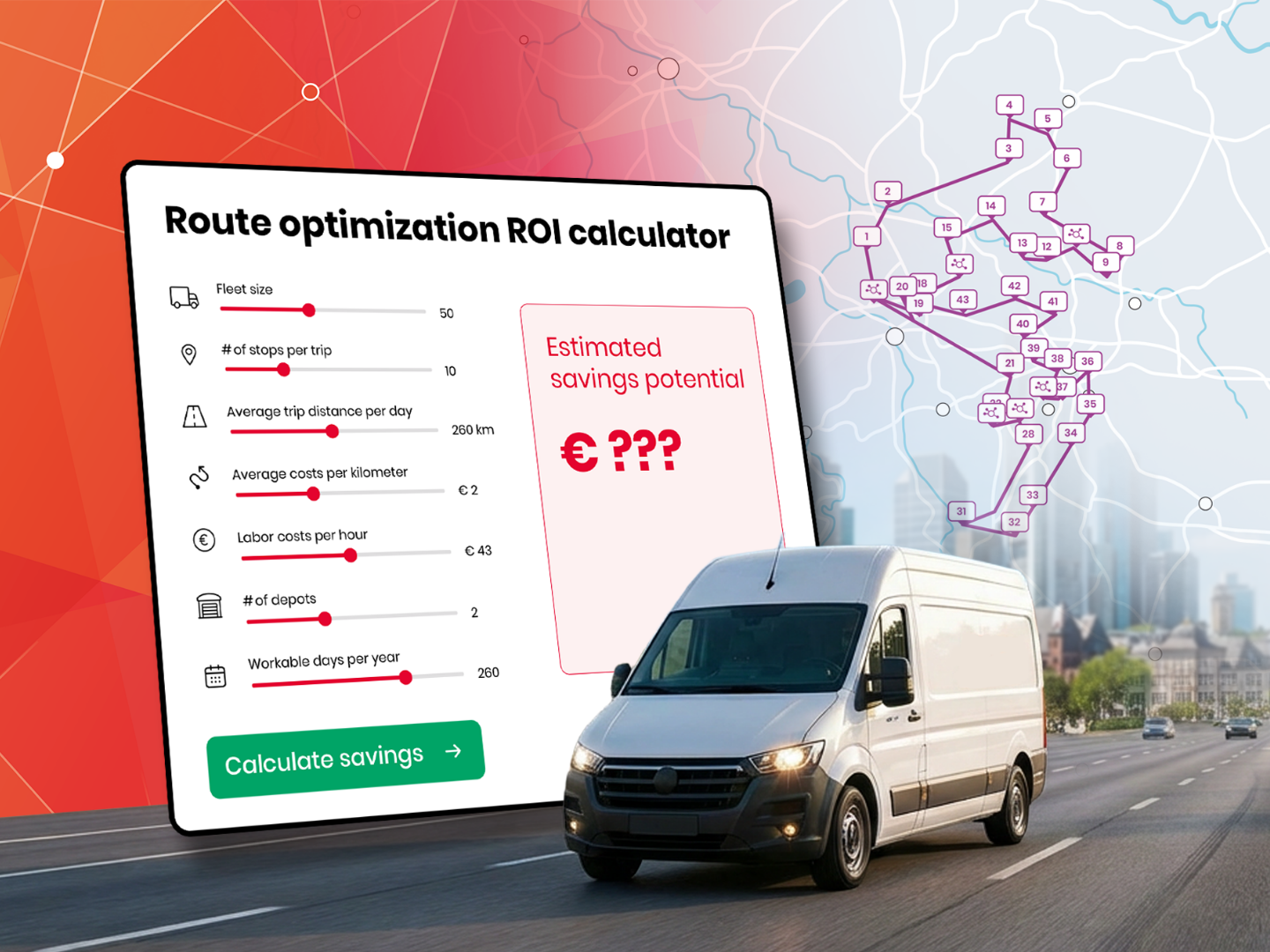
PTV Logistics tools can help quantify these trade-offs before you commit to physical changes — start with the Route Optimization Savings Calculator to put an early number on the opportunity. That is useful when finance wants evidence, operations wants workable routes and leadership wants to understand the total cost of ownership. The strongest case shows both the network-level impact and the daily planning impact.
Checklist: Is your current network holding you back?
Use this checklist to decide whether your network model needs closer review:
- Your planners make frequent last-minute route changes to meet SLAs.
- Hubs or depots become overloaded while others still have available capacity.
- Certain lanes remain unprofitable, but the cause is unclear.
- Your team struggles to answer “what if we opened, closed or moved this depot?” with data.
- Planners spend hours adjusting routes, territories or depot assignments by hand.
- Some shipments pass through hubs even when direct movement looks more practical.
- Delivery windows have become tighter than the original network design can support.
- Driver hours, loading times or vehicle restrictions regularly break the planned schedule.
- Peak periods create repeated hub congestion or missed cut-offs.
- Your current tools cannot model truck attributes, low-emission zones or urban access limits accurately.
- Your organization wants to compare hub-and-spoke, flexible and hybrid options before investing.
- Management needs clear ROI proof before approving network redesign or planning software.
Choosing the network that your data supports
Neither hub-and-spoke nor flexible networks are automatically better. A hub-and-spoke network can give your team consolidation, structure and control. A flexible distribution network can give your team more ways to protect service, reduce unnecessary distance and adapt to changing demand.
The right answer depends on your service promises, geography, demand patterns, depot structure, vehicle rules and planning capacity. Data-driven scenario simulation gives your team the clearest way to compare the pros and cons in context. A practical next step is to choose one network question, such as a hub change, depot allocation issue or high-cost lane, then model the current setup against a realistic hybrid alternative with cost, service and planner workload included.
FAQs
Is hub-and-spoke always cheaper than flexible networks?
No. A hub-and-spoke network can be cheaper when consolidation creates fuller vehicles and predictable linehauls. It can become more expensive when extra hub passes add distance, handling, delay or missed time windows. Your team needs cost-to-serve analysis in logistics to compare the total impact, not just trunk transport cost.
What's the difference between hub-and-spoke and point-to-point logistics networks?
A hub-and-spoke network routes shipments through one or more central hubs for consolidation before they continue to their destination. A point-to-point network moves shipments directly between origin and destination, with no intermediate hub. Hub-and-spoke typically wins on cost when it fills trunk vehicles; point-to-point typically wins on speed and reduced handling for lanes with enough volume density to justify a direct move. Most flexible network models use point-to-point routing selectively, alongside hub-based flows, rather than replacing hub-and-spoke outright.
Can I move gradually from hub-and-spoke to a more flexible network?
Yes. Many organizations start with hybrid logistics network design rather than a full redesign. Your team can keep hub-and-spoke flows for stable, high-volume lanes while testing selective direct routes, dynamic depot allocation or regional cross-docking where the data supports the change
How often should I review my logistics network design?
Review your logistics network design whenever demand patterns, service promises, depot capacity, customer locations or regulations change significantly. Many teams also run regular scenario reviews before peak seasons, major customer launches, M&A activity or new regional expansion. The goal is to catch network misalignment before planners have to fix it manually every day.
Do I need separate tools for network design and daily routing?
Not always. Separate tools can create a gap between strategic design and daily routing because the model may not reflect real vehicle constraints, time windows or driver rules. An optimization-first setup helps your team connect network design and scenario planning with daily route optimization, so the chosen design can work in live operations.