
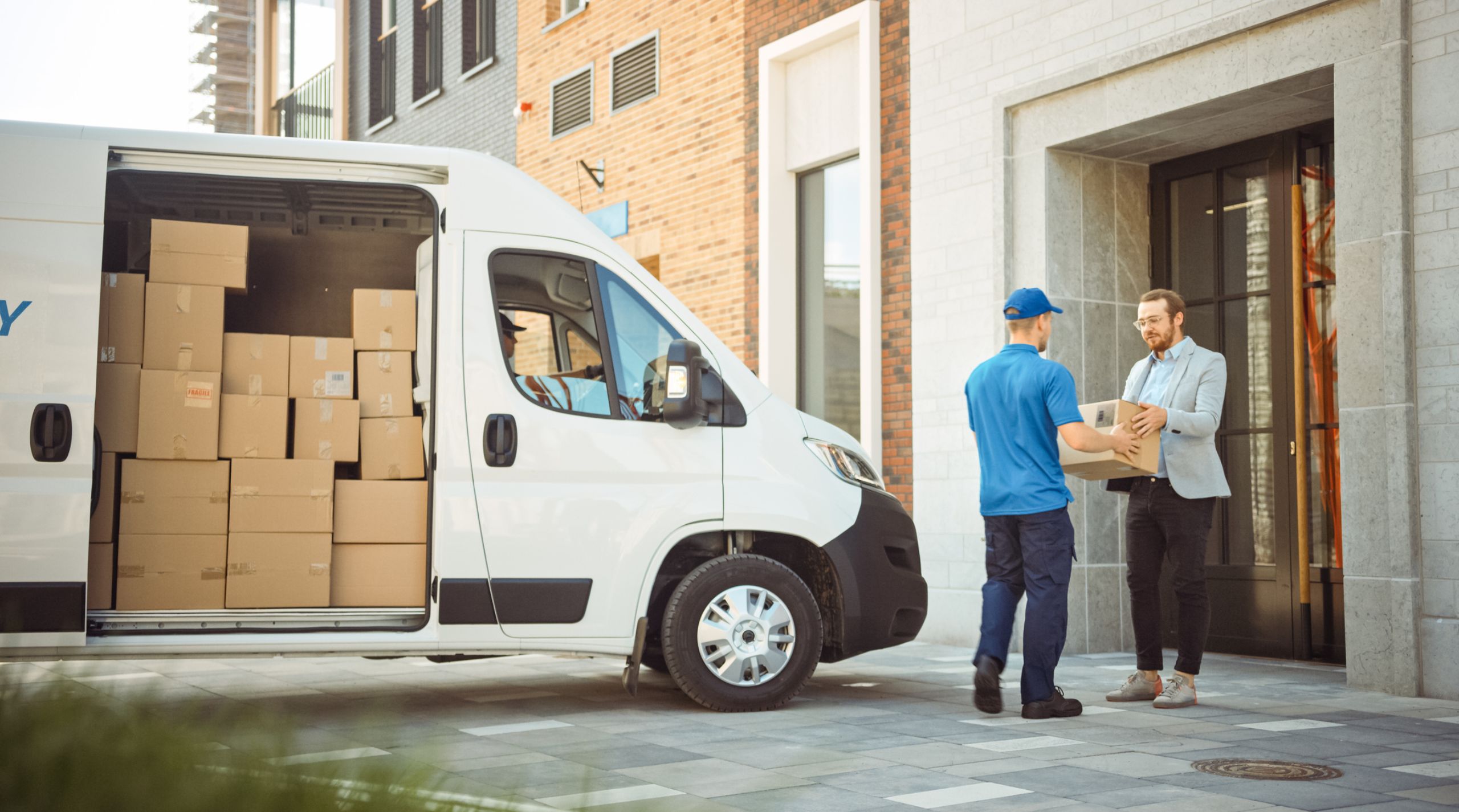
Four causes sit behind the failed first deliveries that planning can prevent: a bad address, a customer who cannot be there at the right moment, a time window the route plan cannot meet, and no fallback when the doorstep handoff fails.
Last mile delivery accounts for 41% of total logistics supply chain costs, according to the Capgemini Research Institute (2019). A repeat attempt adds cost to the part of the chain that already costs the most.
A failed attempt adds rerouting labor, extra fuel, vehicle wear, depot return handling and customer service contacts. Across thousands of daily stops, those repeat attempts add up to a real drain on last mile profitability. A failed delivery also puts customer loyalty at risk, and the retailer or carrier brand carries that risk.
The sections below take each cause in turn: what goes wrong, what to change, and where to act.
What causes a failed first delivery attempt, and how do you fix each cause?
1. Inaccurate address information
A wrong or incomplete address sends the driver to a drop point that doesn’t exist, or to the wrong one. A typo at checkout, a missing house number or a rural address without precise coordinates costs the driver time and can mean a missed delivery window.
- The fix: Catch address problems at order entry, before the route plan is built. Geocode each address and use the match score to flag the ones that need a second look.
- Where to act: Look for an address service that connects to your checkout or order system through an API. A good one reads an address that is incomplete or slightly wrong, returns it in a consistent format with coordinates, and shows how closely the result matches what was entered, so your system can decide whether to accept it or ask the customer to check. The PTV Developer Geocoding & Places API is one example that works this way.
2. Customer unavailability
When customers do not know when the driver will arrive, they are often out when the driver does. A live ETA (estimated time of arrival) lets them be there. Broad, static delivery day notifications and wide delivery windows leave customers guessing. If a consumer steps out for 15 minutes and misses the driver, the attempt is wasted.
- The fix: Move from static scheduling to live tracking and automated notifications. Live ETA updates as the driver progresses give the customer the visibility to be present for the handoff.
- Where to act: A transport control tower gives planners live visibility across a fleet and its subcontractors. PTV Axylog tracks vehicle positions by GPS, recalculates ETAs as each stop is completed, and alerts planners when a stop is at risk. Recipients can receive automatic email or SMS updates and a live tracking link that shows the expected arrival time.
3. Narrow delivery schedules
Even when customers provide exact windows, deliveries often fall behind schedule. If a route plan fails to account for speed limits, unloading delays, traffic congestion, or urban access restrictions, drivers arrive after the requested window has closed.
When a driver arrives two hours late to a business with a strict receiving schedule, or after a consumer has left for work, a missed delivery is inevitable.
- The fix: Plan with software that treats time windows as constraints and calculates travel times from traffic patterns, service times and vehicle restrictions.
- Where to act: Route optimization engines weigh customer time windows against driving conditions and driver rules. PTV OptiFlow plans with time windows for each customer, vehicle capacities, and driver limits such as maximum driving time and breaks. It uses time dependent traffic models, so the plan is built to be executable.
4. A lack of alternative drop-off options
When a delivery fails at the doorstep and there is no alternative collection point nearby, the parcel goes back to the depot and a redelivery cycle starts, or a return to sender. A pick up and drop off (PUDO) point or parcel locker gives it somewhere else to go.
Relying only on doorstep handoffs means one failed attempt sends the parcel back.
- The fix: Build PUDO and out of home (OOH) delivery options into your distribution network. Lockers, local retail hubs and service points give customers a fallback and reduce the number of parcels that return to the depot.
- Where to act: Once those points are part of your network, plan them into your routes from the start. PTV OptiFlow supports deliveries and pickups on the same route, so vehicles can collect and continue without returning to the depot.
Why first-attempt failures compound last-mile costs
Every failed attempt pays for the same stop twice, and the second visit uses vehicle capacity and driver time that a new shipment could have used. When a delivery fails:
- Stem miles and fuel burn double: The vehicle must travel back to the customer location on a subsequent day, consuming additional fuel and driver hours.
- Depot handling costs multiply: Depots must unload, re-scan, store, and then prepare failed parcels again for re-delivery.
- Capacity shrinks: Every failed parcel occupying space in a delivery truck during a second attempt displaces a new, revenue-generating shipment.
Addressing first-attempt delivery failures is not just about reducing re-orders – it is critical for protecting overall operating margins and preserving customer lifetime value. To measure and track your fleet’s performance against industry norms, explore our companion benchmarks guide: First-Attempt Delivery Success: Benchmarks & KPIs to Track.
How do you decide which cause to fix first?
Fix first the cause that costs you the most failed stops and let your own data show which one it is. Group your failed first attempts by reason over a few weeks, for example bad address, customer absent, arrived late and no access, and see which group is largest. Your own exception data will answer this more reliably than any industry average.
Once you know, work through the causes in the order they appear in the delivery process: the address at order entry, time windows and fallback points at the planning stage, and live ETAs on the delivery day.
A successful first delivery is largely decided before the driver leaves the depot. The address, the plan and the fallback are all set earlier, and each one is cheaper to fix there than at the door.
Failed first attempts are one driver of last mile cost. For a wider look at reducing it, read our whitepaper, Reducing costs in last mile delivery.