

Many logistics teams still plan routes with spreadsheets and basic map tools. These methods can work for managing a small business with a simple supply chain. But once your order volumes start to rise and your supply chain becomes more complex, they make it hard to keep up with daily operations, let alone continually improve efficiency. That’s why choosing route optimization software has become a major buying decision for so many mid-sized to large businesses.
When looking for the right solution, you will quickly discover a complex market filled with terms like route planning software, fleet routing software and delivery route optimization software that sound similar on the surface. But there are often big differences from one solution or vendor to the next.
Many tools do little more than draw A-to-B routes on a map, based on static data that may or may not be up to date. Most growing businesses benefit far more from choosing a platform that supports logistics route optimization in the real world, with truck-specific routing, constraint-based route optimization, multi depot route planning, execution visibility, and scenario planning for logistics.
This step-by-step guide helps you choose route optimization software based on your company’s actual needs and goals. If you are a transport or logistics leader who is comparing options, preparing a shortlist, or considering when to upgrade from your route planning tool to the right optimization solution, this is the decision-making guide for you.
Step 1: Review your current setup and set goals
Before you compare vendors, start by taking inventory of how your planning currently works, and what you’d like to achieve.
Map your current planning workflow
Many software evaluations go wrong because teams jump straight to demos before documenting the current planning process. Start with the basics:
Who creates the plan today? Is it one planner with years of experience, or multiple planners in different depots and regions? How long does planning take each day? How often do you re-plan when orders change, vehicles break down, traffic hits, or customers call with urgent requests?
Also list which tools and features you currently rely on. Many operations use only spreadsheets plus free navigation tools. Others use a TMS routing module or a lightweight route planning software package, or they use a patchwork of different systems: one for orders, one for route building, one for telematics, and another for proof of delivery.
All this information is important, because the right buying criteria depend on your starting point. A company running single-depot daily rounds with low variability has a very different need than a business coordinating multiple depots, cross-docks, line-haul legs, and last-mile rounds.
Identify constraints that affect your operations
Planners constantly deal with constraints like limited capacity, service levels, depot opening hours, loading and unloading times, driver hours, breaks, vehicle sizes, hazardous goods rules, and road restrictions such as low bridges, tunnels, weight limits, and local access bans.
The best route optimization software for logistics integrates any constraints that impact your operations in real time. Be sure to create a detailed list of all those constraints at this stage.
Define what success looks like
Like with any business-related decision, it’s important to have a clear definition of success when choosing route optimization software for mid-sized to large businesses. In other words, what goal do you want to achieve? This is essentially the route optimization ROI you envision.
Maybe you define success and ROI in operational terms: fewer miles, more stops per route, better vehicle utilization, more stable planning cycles, or higher on-time in-full performance. At the business level, it might mean lower cost-to-serve, better customer experience, stronger planner productivity, or the ability to grow volume without adding headcount at the same rate.
It also helps to separate short-term and long-term goals. Some teams need immediate relief from manual planning. Others are buying for future complexity, such as mixed diesel and electric fleets, tighter delivery windows, or expansion into new regions.
Also Read: Managing mixed fleets: The sustainability and efficiency challenge for 2026
Step 2: Understand your route planning software choices
Not every route planning software category is built for the same job. Below, we cover the main options available on the market.
Basic tools: spreadsheets, free maps, and manual planning
This is where many businesses start. Spreadsheets are flexible. Free maps are familiar. Manual planning feels controllable because planners can see every decision. On the plus side, the costs are low. Teams can adapt quickly. For small, simple operations, this may be enough. But mid-sized to large businesses and even some small businesses with complex supply chains – quickly outgrow basic setups like this.
Spreadsheets do not optimize well across hundreds or thousands of stops. It does not naturally handle multi depot route planning or rapid re-planning. It depends entirely on planner expertise, which creates inconsistency across shifts, sites, and regions. And it often makes it hard to capture why certain routing decisions were made in the first place. This is usually the point where leaders start exploring when to upgrade from your route planning tool to the right optimization solution.
Route planning tool comparison
| Tool type | Pros | Cons |
|---|---|---|
| Basic (spreadsheets, map apps) | Cheap, familiar, easy to start | Hard to scale, manual, inconsistent |
| Built-in modules | Convenient, familiar, fits existing setup | Limited depth, too weak for complex planning
|
| Optimization-first platforms | Handles complexity, stronger optimization, more scalable | Needs careful vendor selection, not all tools offer the same quality |
Built-in planning modules vs. dedicated optimization engines
The next option is software that includes routing as one feature inside a larger platform, often a TMS or ERP. Some companies prefer to keep all their tools within a unified platform for various reasons. Procurement may prefer one vendor. The IT architecture might appear simpler. Employees may be used to working in a familiar environment.
While built-in tools can usually plan basic routes, they do not offer strong truck-specific routing, scenario simulation, network design, or robust support for route planning for complex logistics operations. That means they do not support you with dynamic, real-time features or constraint-based route optimization.
Optimization-first route optimization software platforms
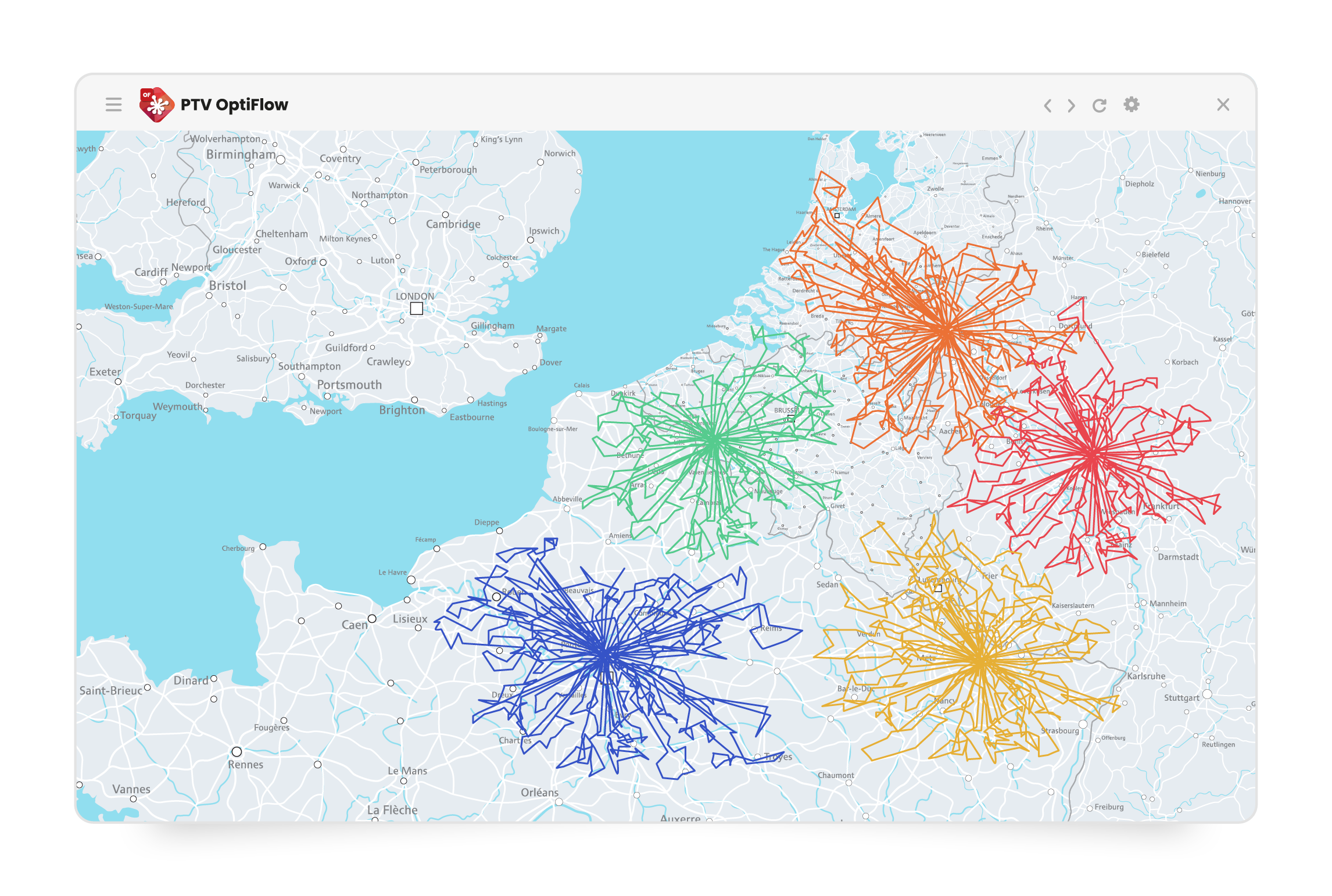
The most advanced route planning software is built on an “optimization-first” principle. That means it is based on algorithms and heuristics, road-centric data, and real-world constraints. While not all optimization-first solutions offer the same quality, the best ones support truck-specific routing, legal and physical road restrictions, time window and capacity constraints, multi-leg flows, multi-depot planning, scenario analysis, and scalable execution across larger order volumes and planning teams.
Many vendors claim to offer route optimization, but not all tools are truly optimization-first. Some are just route drawing tools with limited automation layered on top. They are not really built to solve difficult planning problems or support execution after the plan is made. That’s why careful evaluation, trial scenarios and demos are a must when choosing the right solution.
Step 3: Evaluating route optimization software based on 7 criteria
Next, it is time to make a detailed route planning tool comparison. Here are the 7 top criteria – along with the right questions to ask vendors – when evaluating route optimization software for mid-sized to large businesses.
Routing accuracy and truck specificity
Truck-specific routing is one of the clearest dividing lines in route optimization software. Route planning tools for passenger cars are not a viable option for trucks. They ignore low bridges, weight limits, hazardous goods restrictions, residential access rules, toll implications, or delivery-zone constraints. That leads to detours, service failures, unhappy drivers, and avoidable risk.
What to ask vendors:
- Can the software model truck attributes such as size, weight, height, axle load, or ADR requirements?
- Does it reflect real road restrictions and local traffic rules?
- How often is the road data updated?
- Can different vehicle profiles be applied across the fleet?
Large retail networks highlight why real-world constraints matter. Albert Heijn, for example, operates a highly complex distribution network spanning more than 2,000 locations, each with specific delivery requirements, access restrictions, and time windows.
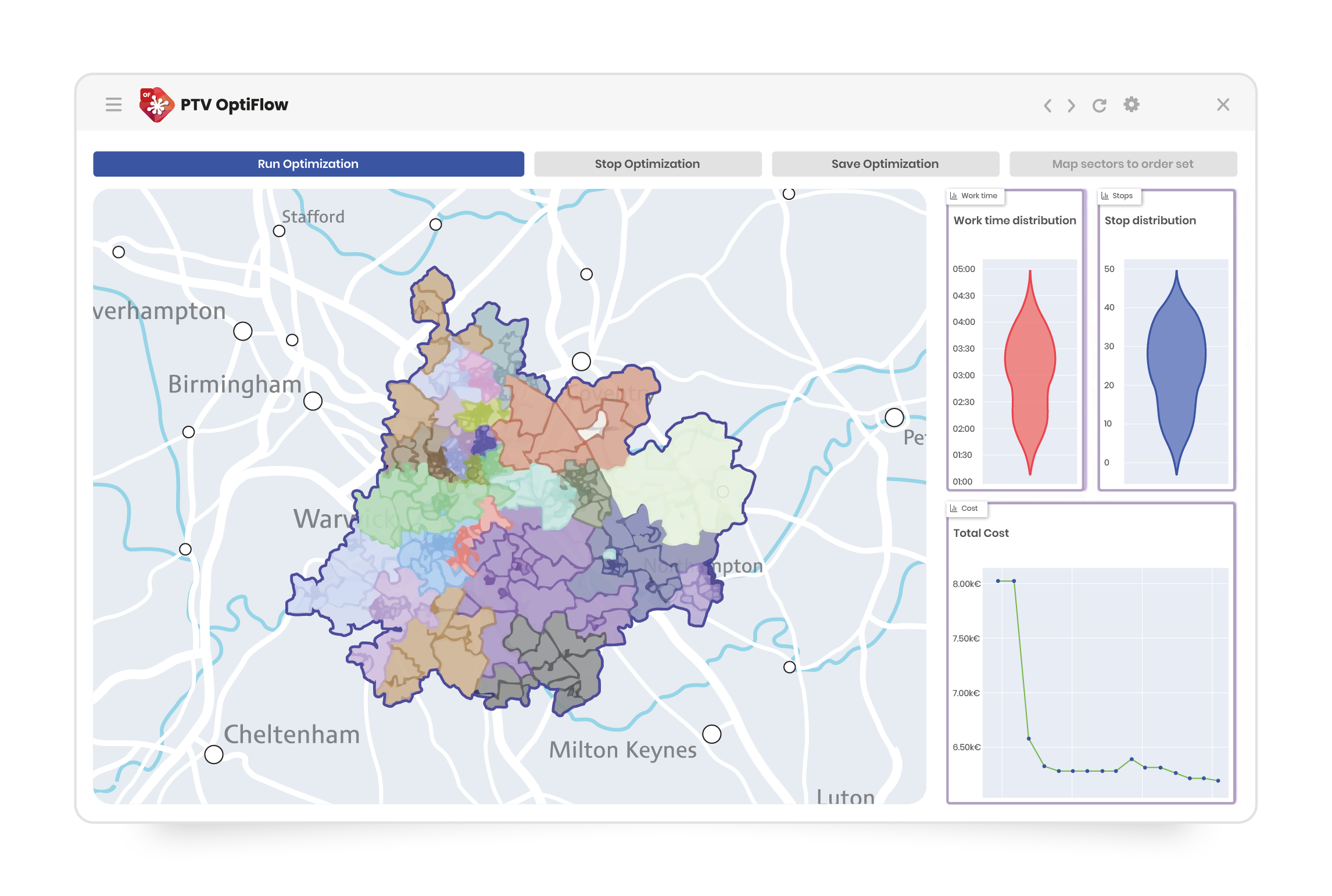
Using PTV OptiFlow, the company integrates these constraints directly into its planning process—accounting for factors such as vehicle types, urban access rules, and multiple delivery flows per location. This enables more realistic, executable plans that reflect operational complexity rather than simplified assumptions.
Support for your real-world constraints
Effective route optimization software must be able to model shipping rules that actually matter to your business, including:
- customer time windows and SLAs
- depot opening hours and cut-off times
- driver working time regulations and breaks
- vehicle capacities by weight, volume, and pallet positions
- loading and unloading durations
- access restrictions at stores, yards, and customer sites
- fleet-specific rules for subcontractors or specialist vehicles
What to ask vendors:
- Can planners configure these constraints without custom development?
- Can business users maintain them over time?
- Can you apply different rules by customer, depot, region, or vehicle class?
- How easy is it to update rules when operations change?
Albert Heijn also demonstrates how planning evolves beyond route efficiency. With a continuously expanding retail network, the company needs to adapt quickly to new store formats, delivery patterns, and local conditions. By using PTV OptiFlow, planners can compare scenarios and adjust planning rules over time—whether optimizing for cost, reducing emissions, or improving driver utilization. This ability to test and refine planning decisions helps the organization respond more effectively to changing market conditions.
Multi-depot, multi-leg, and network complexity
If you plan routes across multiple depots, hubs, cross-docks, or regions, you need route optimization software that can automate more than route sequencing. It should help decide which depot serves which orders, balance loads across the network, structure line-haul and last-mile flows, and coordinate different planning horizons.
That is especially relevant in:
- 3PL and contract logistics networks
- retail replenishment and store delivery
- CEP operations with hub-and-spoke structures
- regional distribution models with trunk routes feeding local rounds
What to ask vendors:
- Can the software optimize depot allocation, not just route sequences?
- Does it support cross-docking and multi-leg planning?
- Can it balance utilization across depots and territories?
- Can it support strategic network design, such as evaluating new depots, redrawing service territories, or changing fleet mix?
For example, a regional retail supplier or parcel network allocates orders across multiple depots before building routes, then coordinates trunk movements into local delivery rounds. In that kind of setup, route optimization software helps the business decide where orders should be fulfilled, how to balance fleet capacity across the network, and how to protect service levels.
Planning scalability and performance
The right route optimization software for mid-sized to large businesses needs to cope with high daily order volumes. How well does a potential route optimization solution deal with short planning windows, growing fleets, more planners, and frequent re-planning during the day?
What to ask vendors:
- How many orders or stops can the system handle in a typical run?
- What happens to performance as depots, vehicles, and constraints increase?
- How quickly can planners re-run scenarios after disruptions?
- What does the architecture look like for growing order volumes or wider rollout?
These topics have a major impact on your company’s operational resilience.
HelloFresh illustrates why scalability is critical in modern logistics. Operating across multiple regions with high order volumes, the company must plan thousands of deliveries within tight customer time windows. With PTV OptiFlow, HelloFresh is able to automate much of its daily planning while maintaining flexibility for adjustments. This allows the organization to scale its operations efficiently, accommodating growth without proportionally increasing planning effort.
Planner workflows and ease of use
Workflow simplicity should be a core evaluation criterion. Modern route optimization software for logistics should make planners faster at their jobs. Look for a solution with intuitive map views, clear KPIs, guided workflows, easy overrides, and planner control over exceptions.
What to ask vendors:
- What does a normal planner day look like in the system?
- How does the software present planning recommendations?
- How easy is it to change a route manually?
- Can planners understand why the engine made a recommendation?
- What training is required before a new planner becomes productive?
Planner trust matters because route optimization software is ultimately a daily operating tool. HelloFresh also highlights the importance of planner usability. While much of the planning process is automated with PTV OptiFlow, planners remain in control and can make adjustments when needed. This balance between automation and manual flexibility helps teams trust the system and work more efficiently.
Integration with your logistics tech stack
Most logistics teams need route optimization software to fit into other systems like your ERP, WMS, TMS, order management, telematics, proof of delivery, customer communication tools, and analytics platforms. If your goal, for example, is to integrate TMS with route optimization, talk with vendors about what implementation looks like.
What to ask vendors:
- What standard APIs and connectors are available?
- How are orders, constraints, master data, and execution events exchanged?
- How are updates versioned and maintained?
- Can the platform support inbound planning data and outbound tracking or execution data?
- What does a typical implementation involve?

For organizations like HelloFresh, integration plays a key role in connecting planning with execution. By linking PTV OptiFlow with existing systems and data sources, planners can ensure that routing decisions reflect real-time operational conditions and customer requirements.
Scenario simulation and network design capabilities
Scenario planning for logistics lets you test how changes in demand, service requirements, network structure, operating costs, and fleet composition affect cost, capacity, and service performance over time. The right route optimization software helps you evaluate future growth, network changes, and shifting operating conditions, so you are better positioned for the mid- to long term.
What to ask vendors:
- Can planners or analysts run what-if scenarios without disrupting live operations?
- Is there dedicated support for network analysis and optimization?
- Can the software compare cost, service, and utilization trade-offs across scenarios?
For example, a fast-growing regional distributor entering new delivery areas may need to decide whether to add a depot, redraw territories, change its fleet mix, or tighten service windows. Scenario testing lets you compare those options before making costly operational changes. It helps you make choices that support growth, optimize asset utilization, and reduce risk. For organizations like Albert Heijn, scenario planning is already part of continuous improvement. By comparing alternative planning configurations and evaluating their impact, the company can fine-tune operations over time and respond more effectively to changes in demand, capacity, or network structure.
In practice, leading organizations are moving toward platforms that connect decisions across three levels: operational planning for daily routes, tactical planning for resource allocation, and strategic planning for long-term network design.
Step 4: Calculate route optimization ROI, TCO, and time-to-value
The best route optimization software for logistics improves planning quality and delivers measurable financial value.
Where route optimization delivers measurable ROI
Route optimization ROI appears in real performance metrics and KPIs like these:
- miles driven
- fuel and toll spend
- driver hours and overtime
- stop density and fleet utilization
- subcontractor reliance
- on-time performance
- customer communication and SLA adherence
- planner time spent building and fixing routes
- manual errors and less dependence on tribal knowledge
Improving productivity is a major priority for any growing business. Route planning for complex logistics operations lets you move to a more automated plan-review-adjust workflow. It makes planning more consistent and re-planning easier.
The impact of optimization becomes particularly clear in performance metrics. HelloFresh, for example, has reduced transportation costs by up to 16% since adopting PTV OptiFlow, while also lowering CO₂ emissions through more efficient route planning. By automating time-intensive planning tasks, the company has also freed up its teams to focus on higher-value activities such as improving delivery performance and exploring future optimization scenarios.
Explore the full HelloFresh story to see how these results were achieved in practice: 16% Less Costs – HelloFresh’s Route to Savings with OptiFlow
Total cost of ownership: Beyond license price
A cheap tool can become expensive if it is difficult to configure, slow to integrate, or hard for planners to trust. That is why total cost of ownership (TCO) should include:
- implementation costs
- integration work
- internal IT requirements
- training and onboarding
- support model
- updates and maintenance
- change management
- future extensibility
Some key questions include: how much configuration can your internal team manage without services support? How updates and upgrades are handled? Is the platform cloud-based?
Also ask for evidence. Any reputable vendor provides customer case studies that show how their solutions perform in real life.
Time-to-value and rollout approach
Rollouts usually start with a pilot depot, region, or business unit. That creates a controlled environment for integration, KPI tracking, planner adoption, and process tuning before wider scale-up.
Some important questions to ask vendors:
- How long does a typical first rollout take?
- What data do you need to get started?
- How do you measure success during the pilot?
- What support do you provide for planner onboarding and value tracking?
Speed of implementation may seem like a benefit. But the real KPI is time to value. Make sure your vendor has a clear focus on delivering value, along with a track record of successful implementation.
Step 5: Narrow down your choices
Finally, it is time to shortlist the vendors that match your company’s needs the best. Once you have narrowed your search to just a few vendors, use the checklist below to make sure the vendor covers everything you need to know when issuing a request for information (RFI) or request for proposal (RFP).
Core routing and optimization questions
- How does your system handle truck restrictions and road constraints?
- Which types of constraints can we configure ourselves?
- Do you support truck-specific routing, hazardous goods, and local access restrictions?
- How do you model time window and capacity constraints?
- Can planners explain why the optimizer made a recommendation?
Operational complexity and scalability questions
- What are your reference customers that resemble our scale and operating model?
- How many orders or stops can your typical customers plan per day?
- How does the system perform across multiple depots, regions, or planning teams?
- Do you support cross-docking, multi-leg planning, and depot allocation?
Workflow and usability questions
- Can you walk us through a planner’s day using the tool?
- How do planners review, override, and approve suggested routes?
- What is the onboarding process for new planners?
- How do you help planners trust the outputs?
Integration and IT questions
- What APIs and connectors are available?
- What does a typical integration project look like?
- How do you handle versioning, updates, and data quality issues?
- Can we integrate TMS with route optimization as part of a phased rollout?
ROI and success metrics questions
- Which KPIs do your customers typically improve?
- How do you help customers measure route optimization ROI over time?
- What payback periods do you typically see for organizations like ours?
- Do you have customer examples with verified operational outcomes?
How to choose route optimization software for your business
Now that you know how to choose route optimization software for your business, it is time to make your choice. Here are some final guidelines to keep in mind.
Are basic tools enough?
If you run a single depot or have low order volume, low constraint complexity, and stable daily rounds, simple tools may still be enough. In that case, lightweight route planning software or a modest routing module may be the right fit for your operations and budget.
Do you need optimization-first, constraint-aware routing?
You are probably in this category if you are working with:
- multiple depots or regions
- strict SLAs and customer time windows
- mixed fleets and truck restrictions
- high order volumes
- frequent re-planning
- cross-dock or multi-leg flows
- pressure to reduce cost-to-serve without hurting service
This is where optimization-first platforms earn their keep. They are built for route planning for complex logistics operations that goes beyond basic A-to-B routes and manual stop sequencing.
Building a roadmap: Start simple, grow in sophistication
The smartest buyers often choose a platform that meets their needs but gives them flexibility to keep growing. That may mean starting with daily route optimization, then adding scenario planning for logistics, network design, execution visibility, and richer planning logic over time. This is especially important for organizations dealing with fast growth, fleet electrification, or changing business models.
Turn evaluation into action with the right route optimization software
Choosing the best route optimization software means looking beyond generic route planning software claims and evaluating what matters in practice: truck-specific routing, support for real-world constraints, multi depot route planning, scalability, planner usability, integration strength, and the ability to connect daily execution with longer-term scenario planning.
A structured evaluation helps you see that clearly. Map the workflow you have now. Document the constraints that actually matter. Define the KPIs you need to improve. Then focus on the questions you need your vendor to answer. That is how you find the right route optimization software with the best ROI for your business.
Route Optimization Software FAQs
What is the difference between route planning and route optimization?
Route planning usually means creating routes and stop sequences. Route optimization goes further. It uses algorithms and business rules to produce better plans across multiple variables such as time windows, vehicle capacities, driver hours, depot allocation, and truck restrictions. In logistics, that difference matters because a route that looks efficient on a map may still be infeasible in real operations.
Do small and mid-sized businesses really need advanced route optimization?
Instead of looking at company size alone, it is important to factor in complexity. A mid-sized business with strict SLAs, multiple depots, mixed fleets, and demanding customer windows may need stronger route optimization software than a larger company with simpler daily rounds. Route optimization for small and mid-sized businesses can support your company’s growth and improve efficiency in that case.
How long does it take to implement route optimization software?
It depends on scope, integrations, and process complexity. Many organizations start with a pilot site, region, or planning process and then expand. Buyers should focus not only on technical go-live, but also on planner adoption, data readiness, and KPI tracking.
How do I know if my planners will adopt a new system?
Adoption usually depends on three things: whether the tool reflects real operational rules, whether the workflow is intuitive, and whether planners can understand and adjust the plan without losing control. That is why usability should be tested as seriously as optimization performance during any evaluation.